
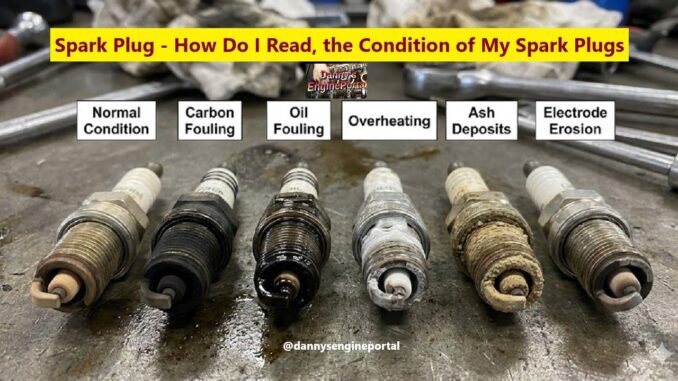
Learning how to read the condition of a spark plug, can be a valuable tuning aid.
Because, you can determine a great deal about your engine’s, overall operating condition. Usually, just by examining the plugs insulator color.
So, a quick inspection can not only tell you, if it’s time for spark plug replacement. But, can also speak volumes, about your engines condition as well.
Consequently, if your vehicle has a little less spunk lately, it might be time for a Spark Plug change.
Is your engine running too lean? Too rich? Is there an issue with, oil control or ignition timing? Or is everything, just fine with your engine? Spark plug problems are common.
In general, a light tan/gray color tells you that, the spark plug is operating, at optimum temperature. And, that the engine, is in good condition.
Dark spark plug coloring, such as heavy black dry deposits, may be a condition of:
- A rich fuel condition.
- Too cold a heat range spark plug.
- A possible vacuum leak.
- Low compression.
- Overly late ignition timing.
- Too large a plug gap.
While, Wet deposits, may be an indication of:
- A blown head gasket.
- Poor oil control from rings.
- Valve train problems.
- An extremely rich condition.
Depending on the type of the liquid, present at the firing tip.
Also, look for any signs of fouling or excessive heat. Because, this will help prevent, further deterioration of performance and possible engine damage.
So, How Do I Read The Condition Of My Spark Plugs
By comparing the image along with the description may tell you what is happening inside your engine. Let’s call it a “window into your engine”.
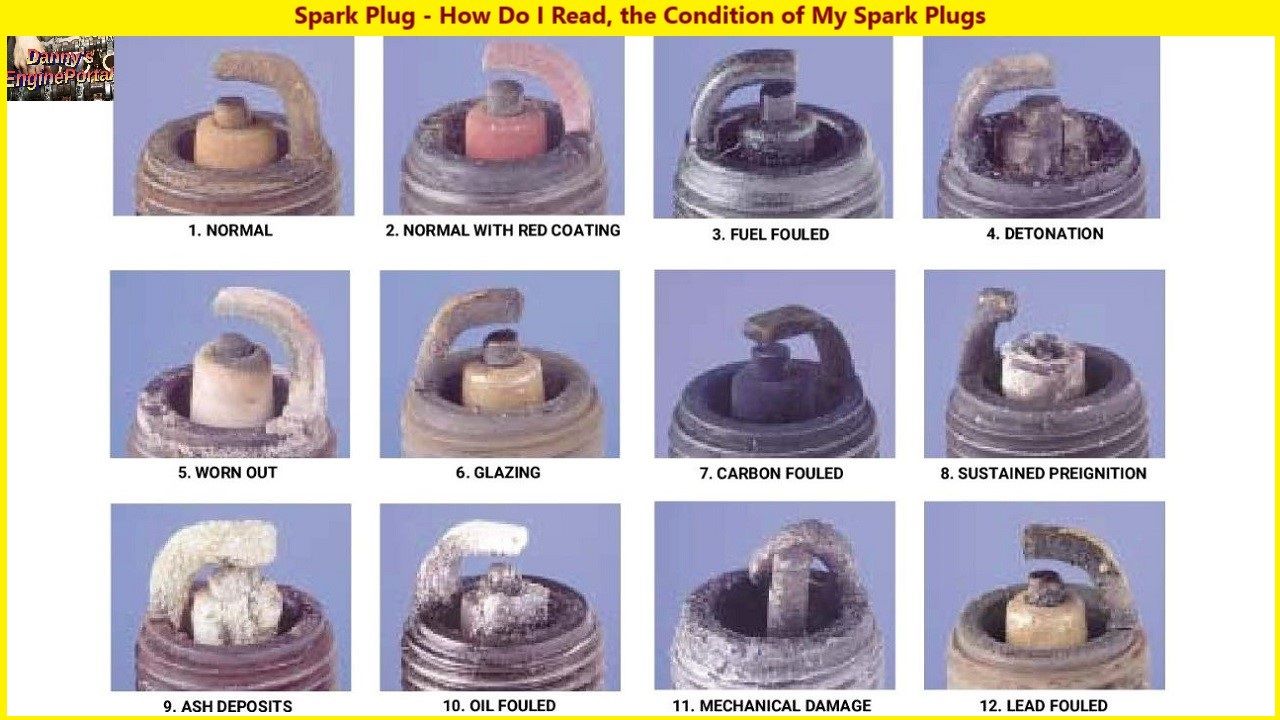
1. Normal Condition
- So, if the firing end of the plug is a grayish/tan to white color. Then, the heat range is correct and its condition is judged as normal. As a result, the spark plug, is functioning optimally.
2. Normal With Red Coating
- If the plug has a pinkish/red color on the ceramic insulator tip, the center electrode and the ground electrode. Then, it is the same as a normal plug, but has this coating because of additives in unleaded fuel.
3. Fuel Fouled
- So, the firing tip of the plug is damp with gas and also smells like fuel. Also, the insulator is the same color as charcoal. Then, this tells you that the cylinder is not using all the fuel supplied to it. Check to see if you have an overly rich fuel mixture or ignition problems. Also, leaking fuel injectors or the spark plug heat range is too cold.
4. Detonation
- Check if the spark plug insulator is cracked, chipped or broken. There may be damage to the ground electrode. It can be caused by a low octane fuel or an over advanced timing. It can also present as an engine knock. Check for a faulty (EGR) system, or a bad knock sensor (KS). Also, confirm the plug is the proper heat range.
5. Worn Out
- The centre and ground electrodes are eroded, have rounded edges and are badly worn away. Hard starting and misfiring during acceleration may occur. As a result, get new spark plugs.
6. Glazing
- It looks like the ceramic insulator tip appears to have a melted, and has a glazed coating. This could mean that the spark plug is running too hot at higher speeds. As a result, get new spark plugs with a cooler heat range.
7. Carbon Fouled
- There is a black, sooty coating on the firing end of the plug. Spark plug heat range is too cold and is caused by excessive low speed, and short distance driving. As a result, get new spark plugs with a higher heat range. A weak ignition system or a rich fuel mixture can be the cause. Fuel injected engines would produce carbon fouling from clogged fuel injectors. Also, vacuum leaks or a problem with the (EVAP) purge valve operation. Furthermore, carbureted engines would have a choke problem.
8. Constant Pre-ignition
- Melted centre and ground electrodes with damaged insulator tip. Initial and constant pre-ignition are two extremes of the same engine problem. Check if you are using the correct plug for your application. Cross firing of spark plug and ignition wires, over advanced timing, lean fuel mixture or a bad (EGR) valve. A build up of combustion chamber deposits causing hot spots. Also, poor heat dissipation because of incorrect torque on plugs or head gasket protrusion into the cylinder.
9. Ash Deposits
- The center, ground and insulator tip has tan colored deposits. This is usually from the use of leaded fuel, fuel additives or oil additives. Check for worn piston rings or valve guides. Also misfiring may occur because of deposits on the electrodes. Note: This can happen in one or more cylinders, depending on the types of failure.
10. Oil Fouled
- Center, ground and insulator tip has a black oily substance. Usually caused by oil in the combustion chamber. Check for worn piston rings, valve guides or worn valve stem seals. Most often the first sign is blue/gray exhaust smoke. Note: This can happen in one or more cylinders, depending on the types of failure.
11. Mechanical Damage
- Center and ground electrode are bent out of position. It has visible damage and may even be missing pieces. The tip of the plug may be completely gone. Above all, try to find any missing pieces and remove them from the cylinder. Confirm you are using the correct spark plug for the application. As the depth of the thread can be different. Note: There can also be engine damage, from debre in the cylinder.
12. Lead Fouled
- The ceramic spark plug tip has a brownish/yellow glazed coating. And, is usually from using a leaded fuel and/or a fuel additive containing lead. Consequently, this could make the firing tip conductive, allowing for incorrect sparking. As a result, get new spark plugs.
So, comparing your spark plugs to these images along with this information can tell you a lot about your engine. It’s like having a “window into your engine”.
In Summary: Spark Plug
So, to keep your engine operating efficiently, don’t mix plugs in varying states of wear. Either replace all the plugs with new ones or clean, gap and reinstall, all the old ones.
“Thanks For Reading!”