A car engine cooling system regulates engine temperature to prevent overheating, typically using a pressurized liquid loop.
It prevents engine overheating by circulating coolant through essential components.
Primarily the engine block, cylinder head, water pump, radiator, thermostat, and hoses.
The cooling system absorbs heat at the engine and releases it at the radiator.
Key Components of the Cooling System:
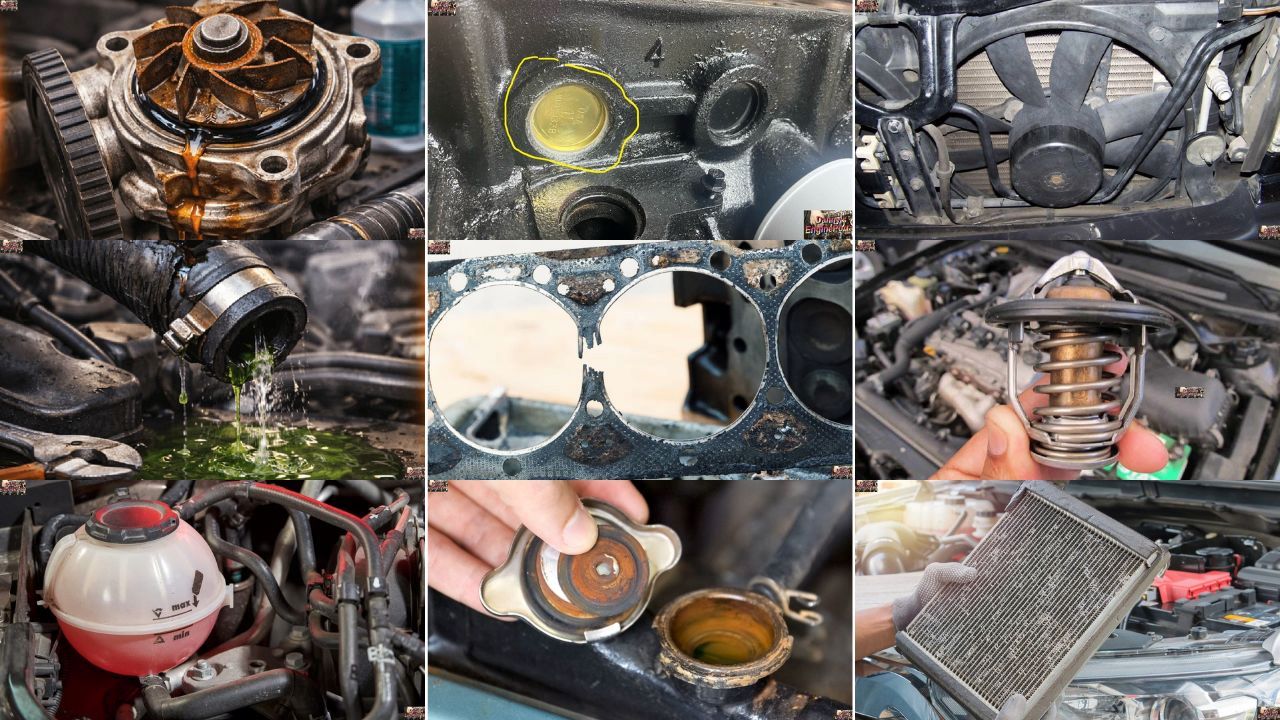
- Water Pump. The “heart” of the system, this impeller-driven pump circulates coolant through the engine block, heater core, and radiator.
- Radiator. A heat exchanger that cools the hot fluid by circulating it through thin tubes with air-cooled fins.
- Thermostat. A temperature-sensitive valve that remains closed while the engine is cold, allowing for faster warm-up, and opens to allow coolant into the radiator once the engine is hot.
- Cooling Fan(s). Draws air through the radiator, crucial for cooling when the car is moving slowly or idling.
- Radiator Cap / Pressure Cap. Seals the system and increases pressure to raise the coolant’s boiling point, allowing the engine to run safely at higher temperatures.
- Coolant / Radiator Hoses. High-temperature, high-pressure rubber hoses that connect the radiator to the engine.
- Overflow / Expansion Tank. A plastic tank that allows for the expansion of hot coolant, keeping the system full and free of air.
- Heater Core. A small radiator in the dashboard that provides heat to the cabin using hot coolant.
- Freeze Plugs / Engine Block Plugs. Steel plugs that hold in the engine block and can pop out if the coolant freezes and expands, preventing the block from cracking.
- Head Gasket / Gaskets. Seals between major engine parts to prevent coolant from mixing with oil or entering the combustion chamber.
Related Posts
- Belts, Hoses, Tensioners and Pulleys: Keep The Coolant Flowing
- Bad Radiator Cap Symptoms (Causes, Testing & Fix)
- Car Radiator : Consequences Of Car Radiator Overheating
- Car Thermostat Issues: Is Your Engine Coolant Flowing Properly
- Coolant Recovery Tank: What Does It Do and Why Do You Need It
- Cooling Fan Relay – What Does It Do – Failure Symptoms – Testing
- Cylinder Head Cracking – Overheating Is The Most Common Cause
- (ECT) Engine Coolant Temperature Sensor – What Can Go Wrong
- Electric Cooling Fan: What Can Stop It From Working Properly
- Engine Antifreeze Coolant: What Does It Do?, Why You Need It?
- Engine Coolant: What Are The Basics You Really Need To Know
- Engine Coolant Antifreeze – Engine Cooling and Testing Made Easy
- Engine Coolant Temperature (ECT) Sensor: Failure Signs: Testing
- Engine Coolant Temperature Sensor: Step By Step Replacement
- Engine Cooling Fan: Maintaining the Proper Coolant Temperature
- Engine Overheating: Causes, Symptoms, Diagnosis & Fixes
- Engine Thermostat Problems: Will Affect Your Engine’s Performance
- Intermittent Temperature Related Engine Problems, Where To Start
- (MAP) Controlled Thermostats: Provide Several Engine Benefits
- Radiator: Engine Overheating Causes and Consequences
- Water Pump And Timing Belt Replacement – Tips And Instructions
- Water Pump Failure: Common Signs to Identify