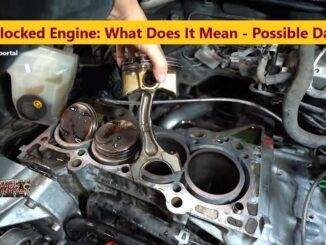
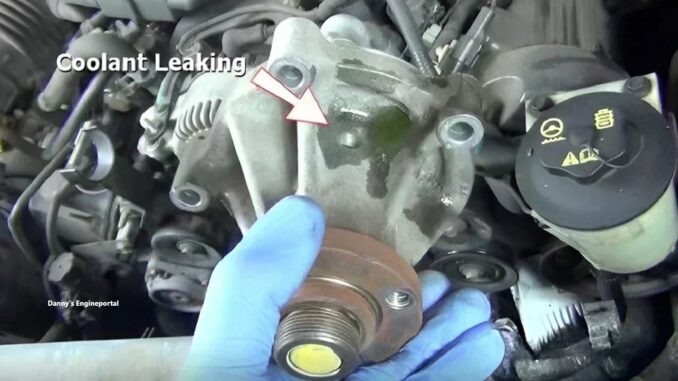
Water Pump Failure can be extremely hard to diagnose.
Although the water pump in most vehicles will last a long time, they are by no means indestructible.
Like any other mechanical device they will produce a few warning signs, that they are wearing out.
This info is only meant to help reduce the time in finding, the actual Water Pump Failure. Your car’s water pump is the key to keeping the entire system cool.
Usually, one of the drive belts on your engine, is what turns your water pump. So, impeller blades on the pump force the coolant to flow, through the engine and back to the radiator. Above all, the water pump is the primary component responsible for keeping this flow.
So, if it works properly, your car will maintain a consistent operating temperature. However, if something fails and the engine gets too hot. Then, a forced air cooling fan kicks in.
When there is a problem with the flow of coolant, your engine will get hot. So, it is time to investigate if your have a water pump failure.
When the water pump fails or is beginning to wear out, it can lead to complete engine failure. So, if the water pump shows signs of weakness or fails completely, coolant will not flow through the cooling system correctly, causing cooling system problems.
What Are The Common Signs Of Water Pump Failure
Temperature Fluctuations
If the cooling system is operating correctly, the temperature should remain stable, throughout a range of vehicle operating conditions. However, if your temperature gauge starts moving between normal and hot, this could indicate a bad water pump.
Other Things That Can Fail That Mirror These Same Symptoms:
- Thermostat
- Cooling Fan
- Sensors
- Rad Cap
- Faulty Rad
Coolant Leaks, Under The Water Pump Mounting
The water pump uses multiple gaskets and seals that keep coolant contained. As a result, ensuring that a consistent flow of coolant, is delivered from the radiator to the engine. Eventually, these gaskets and seals will wear out, dry up, crack or break entirely. So, coolant leaking under the part of the vehicle that houses the water pump, could indicate a water pump failure.
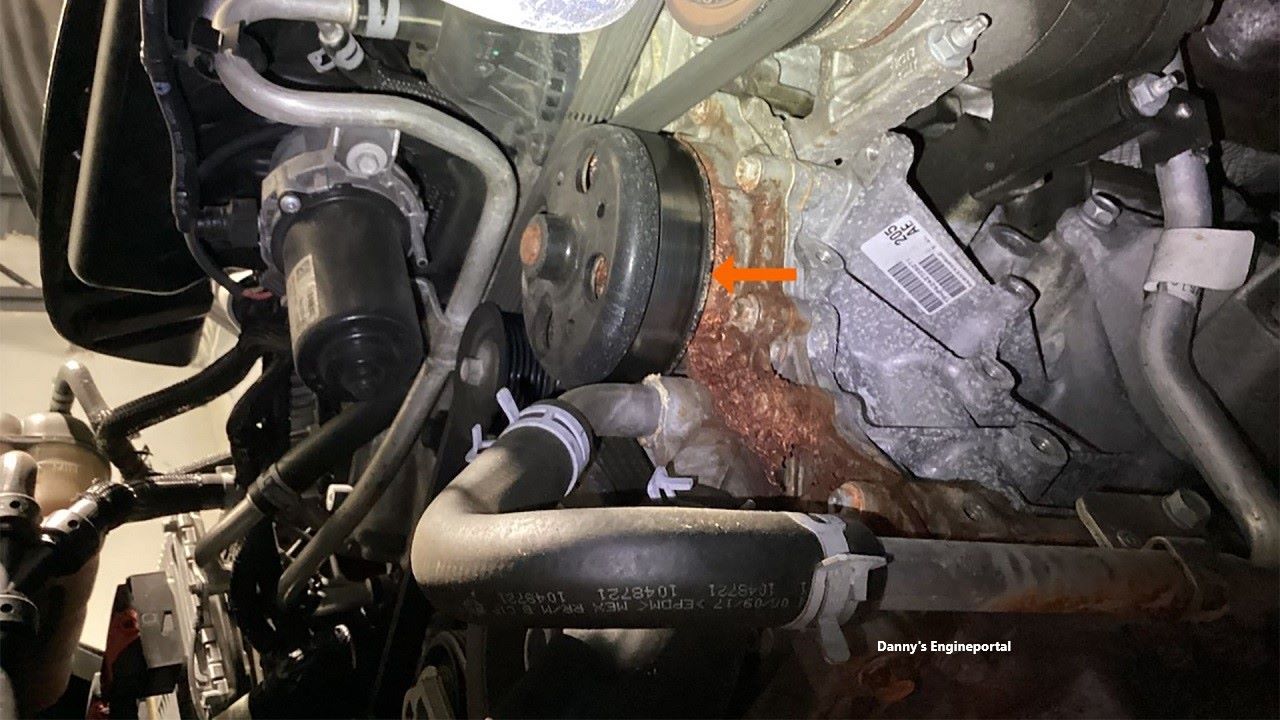
If coolant drips are found, an inspection must be performed. Once cool, check around the engine for signs of coolant leaks. Note: that if the leak is minor, the drips will have dried, leaving a distinctive trail. And, if you think there is a leak, inspect the coolant recovery tank.
Pump Pulley Is Loose And Making Whining Noises
If you notice that there is a loud whining noise, coming from the front of your engine. And, it increases in volume as you accelerate, it could be a water pump bearing or belt. This is typically caused by, a loose belt that creates a harmonic buzzing or whining noise as it circulates.
A loose belt is commonly caused by a faulty belt tensioner or a pulley that has become loose. The bearings that operate the water pump assembly, can wear out as well. And if that happens, the pump will need to be replaced.
Engine Is Overheating
When the water pump fails completely, it will not be able to circulate coolant through the engine block. This results in an engine overheating situation.
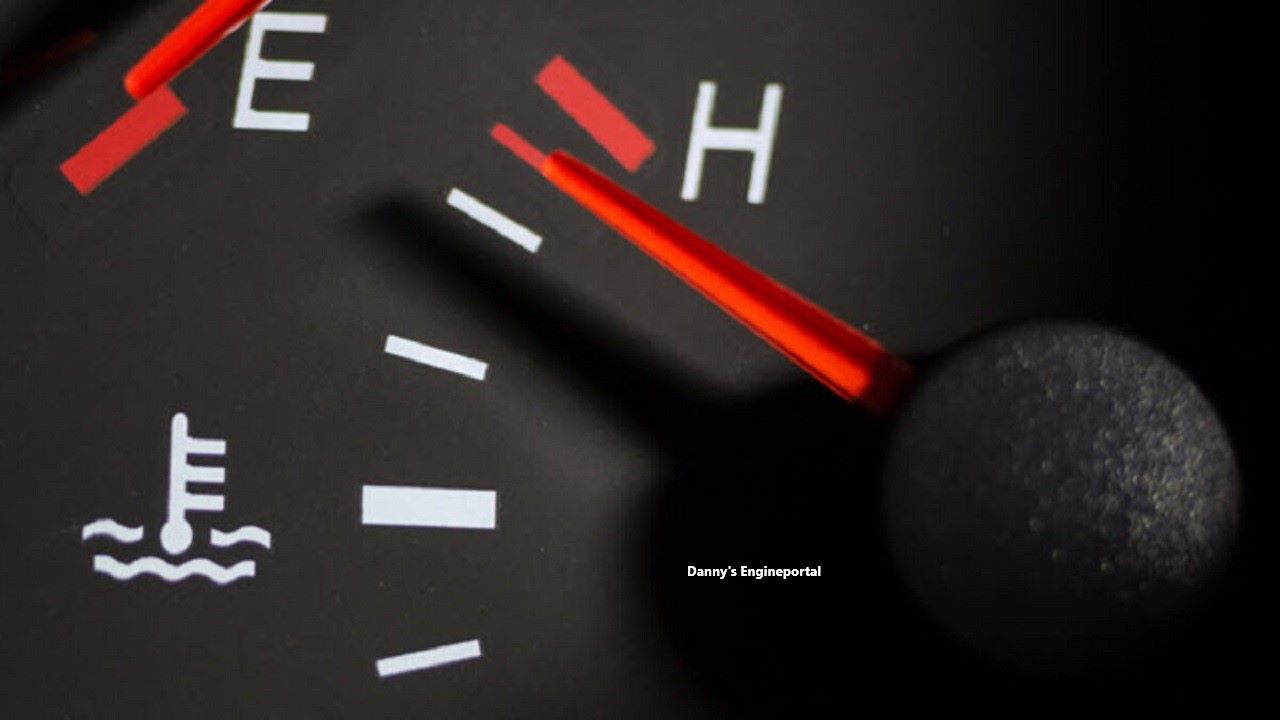
And, if not repaired or replaced quickly, can cause additional engine damage. Including, a cracked cylinder heads, blown head gasket, or burnt pistons. If you notice the engine temperature is running hot on a frequent basis, it’s most likely a water pump failure.
Steam Coming From Under Your Hood
If you notice steam is coming from the front of your engine, it’s a sign of a overheated engine. As discussed above, an engine will maintain a consistent temperature, when the water pump works correctly. And, circulates coolant to a functioning radiator. Above all, it’s never a good idea to drive a vehicle, with a engine that has overheated.
Important Service Tips To Avoid Failures
- Replace old coolant at the recommended car manufacturer service interval. As old worn out coolant allows rust to build up, causing a water pump failure.
- When replacing a belt that runs the water pump, install the belt with the appropriate tension. And, replace belts at the recommended car manufacturer schedule.
- Also, verify the belt aligns with all the pulleys it runs. A loose, misaligned, or over tensed belt will prevent proper operation of the water pump and other accessories. And, can damage the pump shaft, bearing and seal.
- Fix engine overheating problems as soon as possible. Overheating will damage the seal and impeller inside the water pump. Use a quality water pump to keep your cooling system working at, optimal condition for a longer period.
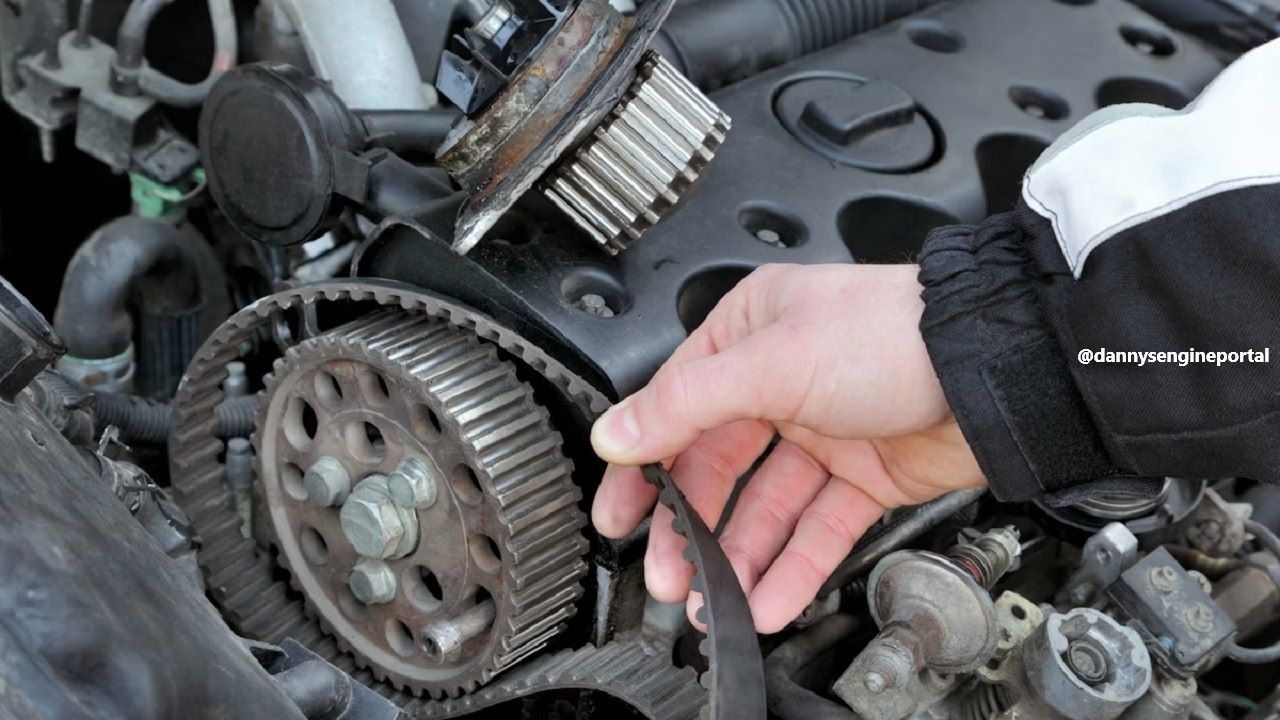
- When replacing a water pump run by a timing belt, always replace the timing belt at the same time. Especially if the water pump was leaking. A coolant contaminated timing belt, will have a reduced service life.
- On the other hand, a worn out timing belt, may break and damage your new water pump. In most applications, the water pump and timing belt have about the same service life. So, you’ll save time and money by doing both at the same time.
Conclusion
Finally, pay close attention to your vehicle and look for the signs of water pump failure. As this can prevent serious or permanent damage.