The emission system starts at the engine’s combustion chamber where fuel and air are mixed and ignited.
This process produces exhaust gases, including unburned hydrocarbons, nitrogen oxides, and carbon monoxide. And are all pollutants that are harmful to the environment.
The car emission system reduces harmful exhaust pollutants (like CO, NOx, and hydrocarbons) and manages fuel vapors to meet environmental standards.
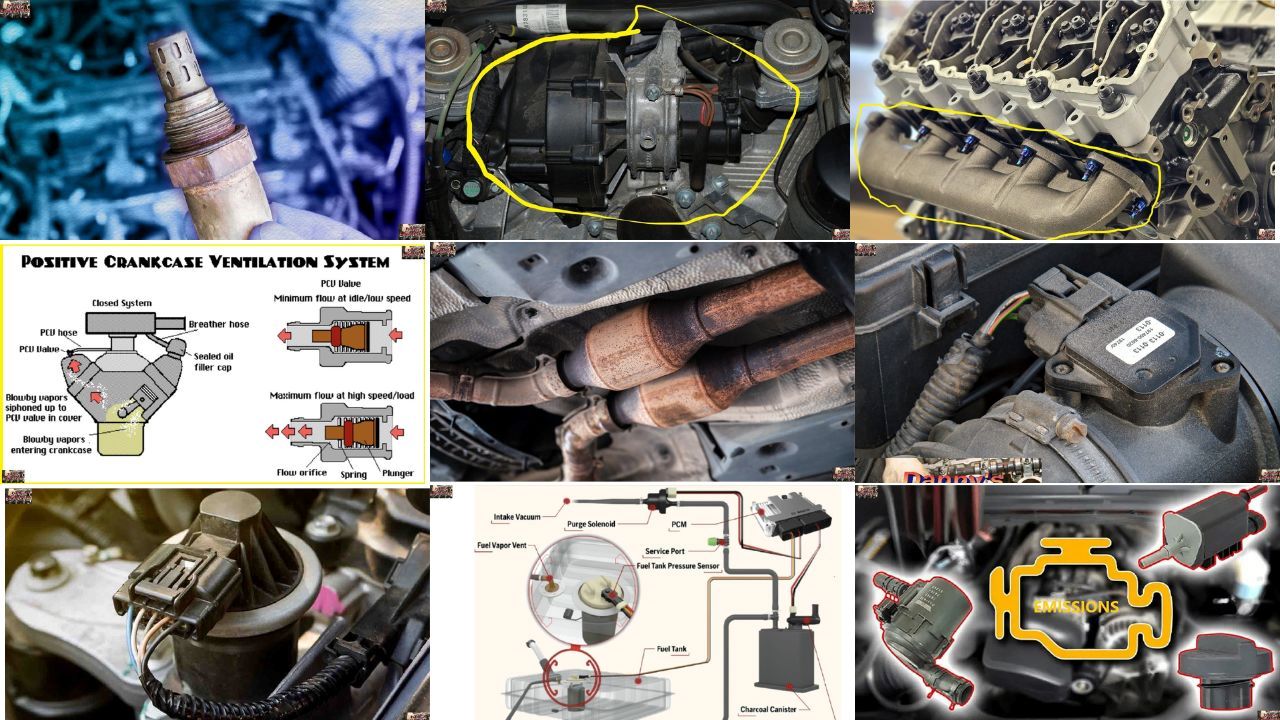
Key components included in the emission system are: the catalytic converter, oxygen sensors, exhaust manifold, EGR valve, and the EVAP system.
Key Components of the Emission System:
- Catalytic Converter. Converts toxic gases (carbon monoxide and nitrogen oxides) into less harmful substances like water vapor and carbon dioxide.
- Oxygen (O2) Sensor. Monitors oxygen levels in the exhaust to help the engine computer adjust the “air fuel” ratio for optimal efficiency.
- Exhaust Manifold. Collects exhaust gases from the engine cylinders and directs them to the catalytic converter.
- Exhaust Gas Recirculation (EGR) Valve. Lowers combustion temperatures by recirculating a small amount of exhaust gas, reducing nitrogen oxide (NOx) emissions.
- Evaporative Emission Control (EVAP) System. Captures fuel vapors from the fuel tank and prevents them from escaping into the atmosphere.
- Positive Crankcase Ventilation (PCV) Valve. Redirects crankcase vapors back into the combustion chamber to be burned, rather than releasing them.
- Air Injection System. Introduces air into the exhaust stream to help burn off unburned fuel.
- Mass Air Flow (MAF) Sensor. Measures the air entering the engine to maintain a proper “air fuel” mixture.
- Exhaust Pipes, Muffler, and Tailpipe. Route the treated exhaust away from the engine, reduce noise, and exit it from the vehicle.
Signs of Emission System Failure:
- Illuminated check engine light
- Strong fuel smell
- Poor acceleration or reduced engine power
- Decreased fuel efficiency
- Rough idling
Related Posts
- (O2) Oxygen Sensor Symptoms (Causes, Testing & Replacement Guide)
- (EGR) Valve: Common Problems And Troubleshooting Procedures
- (PCV) Valve: How Does It Work, Failure Signs, How To Test It
- (PCV) Valve: Major Problems From Lack Of Regular Maintenance
- (PCV) Valve System: This Is Where Crankcase Gases Get Recycled
- (PCV) System: One Of The Biggest Causes, Of Engine Oil Sludge
- (EVAP) Evaporative Emission System Explained
- Air Injection System (AIS) – Air Pump – Function, Types, Failure
- Catalytic Converter – Failure Signs And Testing – Learn The Basics
- Check Engine Light (CEL) – What Can Cause It To Come On
- Exhaust Gas Recirculation: Types, Failure, Cleaning, Replacement
- Exhaust Manifold Leaks: Causes, Failure Signs, Potential Damage
- Emission Control Systems – What Are They – How Do They Work
- Emission Thermactor Plugs – For Small Block Ford Cylinder Heads
- Mass Air Flow Sensor (MAF): Measuring Volume, Density, Temperature
- Oxygen Sensor (O2) Diagnostic Testing Guide: By Walker
- Positive Crankcase Ventilation (PCV) System: What Does It Do