
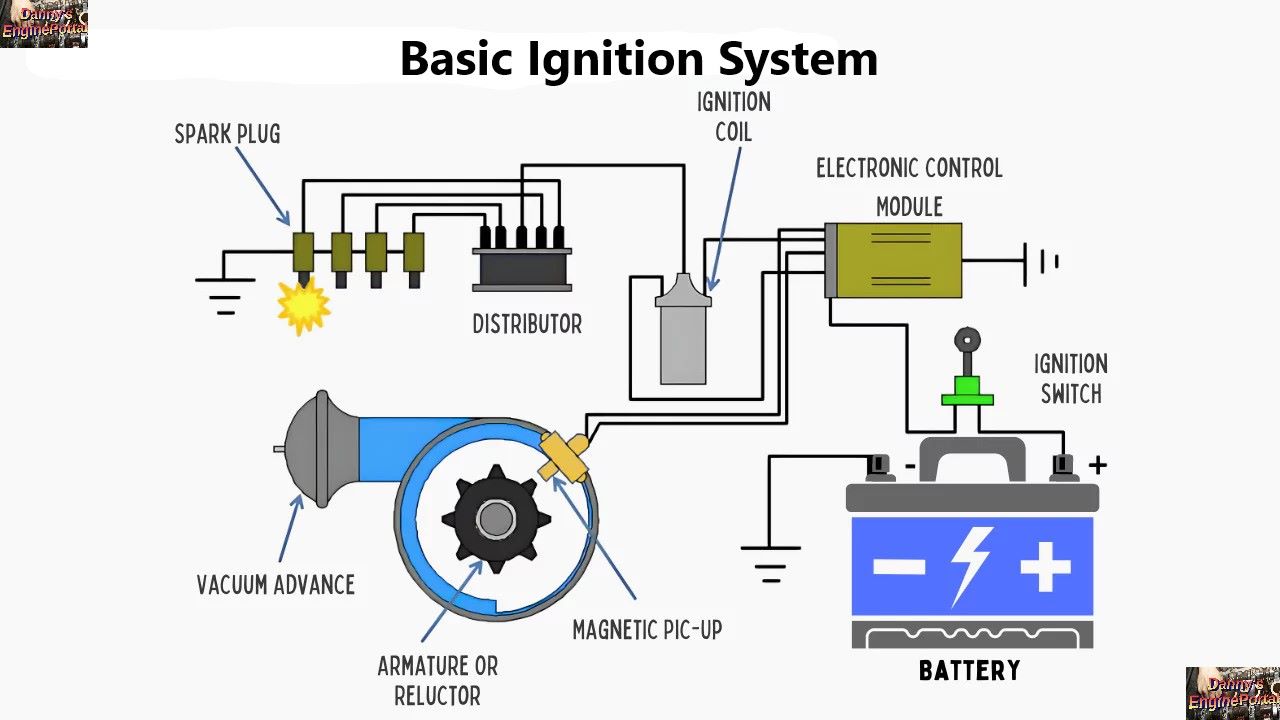
An ignition system generates the electrical spark required to ignite the air-fuel mixture in an engine’s combustion chamber.
By transforming a standard 12-volt battery charge into a high-voltage surge, it delivers precise, timed bursts of power that keep the engine running efficiently.
Modern vehicles primarily rely on advanced, computer-controlled ignition setups, moving away from older mechanical parts.
A properly functioning ignition system directly affects your car’s fuel economy, engine performance, and exhaust emissions. If the spark happens too early or too late (bad timing), it can cause engine knocking, reduced power, or a total engine misfire.
Key Components Include:
Ignition Coil: Functions as a step-up transformer. It takes low-voltage current from the battery and amplifies it into high voltage (20,000 to 40,000+ volts) needed to create a spark.
Spark Plug: Screws into the cylinder head and features a gap at the tip. The high-voltage pulse from the coil jumps across this gap, creating the physical spark that ignites the fuel.
Engine Control Unit (ECU): The “brain” of the modern engine. It monitors crankshaft and camshaft positions to dictate precisely when the spark should fire for maximum power and fuel economy.
Common Types of Systems Include:
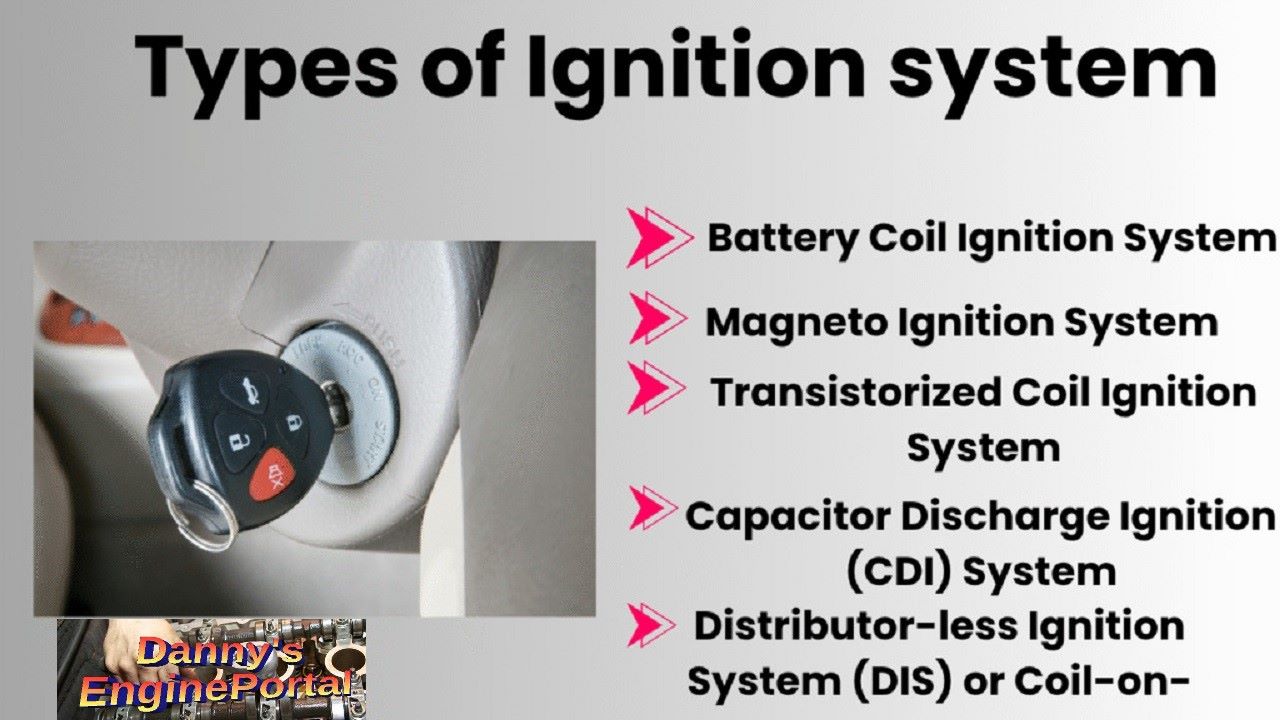
Coil-on-Plug (COP): The standard for modern vehicles. Instead of a single coil and distributor, a dedicated, small ignition coil sits directly atop each spark plug. This allows the ECU to control the timing of each cylinder individually.
Distributor-less (Waste Spark): Uses a coil pack where one coil fires two spark plugs simultaneously. One plug fires during the compression stroke (igniting fuel), while the other fires during the exhaust stroke (a “waste” spark).
Electronic Ignition (EI): Replaces traditional, wear-prone mechanical breaker points with electronic sensors (like a reluctor ring) that trigger the spark, requiring less maintenance and offering better performance.
Conventional (Breaker-Point) Ignition: Found in vintage and classic cars. It relies on a mechanical distributor and points that physically open and close to interrupt the primary circuit, generating the spark.
Related Posts
- Automatic Shutdown (ASD) Relay – Function – Failure – Testing
- Camshaft Position Sensor Symptoms, Testing & Replacement (CMP Guide)
- Car Battery – Know What Can Go Wrong, Before You Disconnect It
- Coil On Plug Ignition System: A Game Changer in Coil Technology
- Crankshaft Position Sensor Symptoms, Testing & Replacement (CKP Guide)
- Distributorless Ignition System – Get to Know the Components
- Engine Spark Knock: Causes, Symptoms, and Solutions
- Ignition Coil: Function, Coil Types, Failure Symptoms and Testing
- Ignition Switch: Understanding its Importance in Vehicle Security
- Ignition Timing – The Spark Plug Has To Fire At The Proper Time
- New Spark Plugs: Improve Engine Performance & Efficiency
- No Spark – When Your Engine Cranks, But Has No Spark
- Oil Leak In Spark Plug Well – Know The Signs – What Can Happen
- Push Button Start Troubleshooting: Why Won’t the Engine Crank?
- Spark Plug Color: Learn The Symptoms And Recommendations
- Spark Plug Health Is Directly Linked, To Your Engines Performance
- Spark Plug Problems: Function, Failure And Replacement
- Spark Plug Reading: How To Do It: What It Can Tell You