An engine’s fuel system consists of several critical components that store, filter, transport, and inject fuel into the engine.
Some of these parts include the fuel tank, pump, filter, lines, fuel rail, injectors, and pressure regulator.
The fuel system parts all work together to supply the exact amount of fuel needed for efficient combustion.
Most modern vehicles feature an electric fuel pump located inside the fuel tank, which ensures the proper volume and pressure of fuel required for engine operation. This type of pump is standard in vehicles with electronic fuel injection systems, which dominate the roads today.
Older vehicles with carbureted engines operate differently, using a suction-style pump mounted on the engine. This pump draws fuel from the tank and pressurizes it before sending it to the carburetor. Meanwhile, direct injection engines, which are the latest in gasoline technology, often use two pumps: a lift pump in the fuel tank and a high-pressure pump mounted on the frame or engine to deliver fuel at the necessary pressure to the injectors.
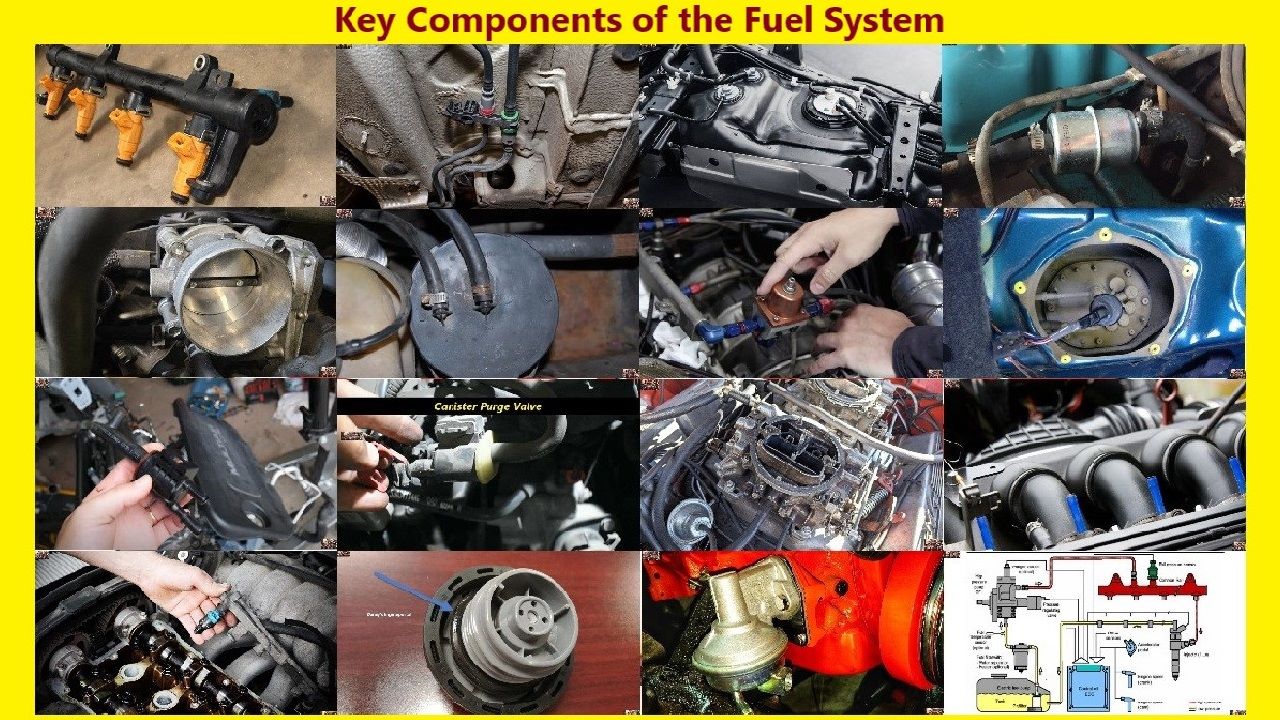
Key Components of the Fuel System:
- Fuel Tank (Fuel Cell): Stores the fuel (gasoline or diesel) for the vehicle.
- Fuel Pump: Draws fuel from the tank and delivers it to the engine under pressure. In most modern cars, this is an electric pump located inside the tank.
- Fuel Filter: Removes contaminants, dirt, and impurities from the fuel to protect the injectors.
- Fuel Lines: The network of hoses and pipes that transport fuel from the tank to the engine.
- Fuel Rail: A distribution pipe that delivers fuel to each individual injector.
- Fuel Injectors: Electromagnetic valves that spray a fine mist of fuel into the combustion chamber or intake manifold.
- Fuel Pressure Regulator: Maintains the correct operating pressure for the injectors to ensure optimal performance.
- Return Line: Sends excess, unused fuel back to the tank to keep fuel temperatures lower, allowing for better efficiency.
Additional Components
- Throttle Body: Controls the amount of air entering the engine, working with the fuel system to create the right air-fuel mixture.
- Intake Manifold: Distributes the air-fuel mixture to the cylinder heads.
- Evaporative Emission Control System (EVAP): Captures fuel vapors to prevent them from escaping into the atmosphere.
Related Posts
- Automatic Shutdown (ASD) Relay: Function – Failure – Testing
- Electric Fuel Pump Diagnostic Testing Guide: By Carter
- Electric Fuel Pumps – How Do They Work – How Can They Fail
- Engine Fuel System: Signs of Trouble and What to Check
- Fuel Getting Into Engine Oil: Learn The Cause, Effect And The Fix
- Fuel Injector – Deposits Can Build Up And Clog The Fuel Injector
- Fuel Injectors: Usually Only Fail, In One Of Three Different Ways
- Fuel Leak: If You Smell Fuel This Could Be a Sign of a Fuel Leak
- Fuel Pressure Regulator – Do You Have The Correct Fuel Pressure
- Fuel Pressure Regulators – Commonly Fail In One Of Two Ways
- Fuel Pump Failure: Signs, Symptoms, and Solutions
- Fuel Pump Issues – Excessive Heat – Contamination, Dirt, Rust
- Fuel Pump Related No Start Problems: What Should You Check
- Fuel Pump Relay – Function – Failure – Testing Procedures
- Fuel System Related Problems – Not Always Easy to Solve
- Fuel Wash: What is it – Check If You Have It – Common Causes
- Hard Starting Engine: Cold, Hot, Both or Just After Refueling
- Mechanical Fuel Pumps – Everything You Need To Know
- Noid Light: Tests For An Electrical Signal, At The Fuel Injector
- Poor Fuel Economy: Common Causes, And How To Combat Them
- Reducing Fuel Consumption – Keep More Money, in Your Pocket
- Reducing Fuel Cost Is Easy: If You Can Follow A Few Rules