
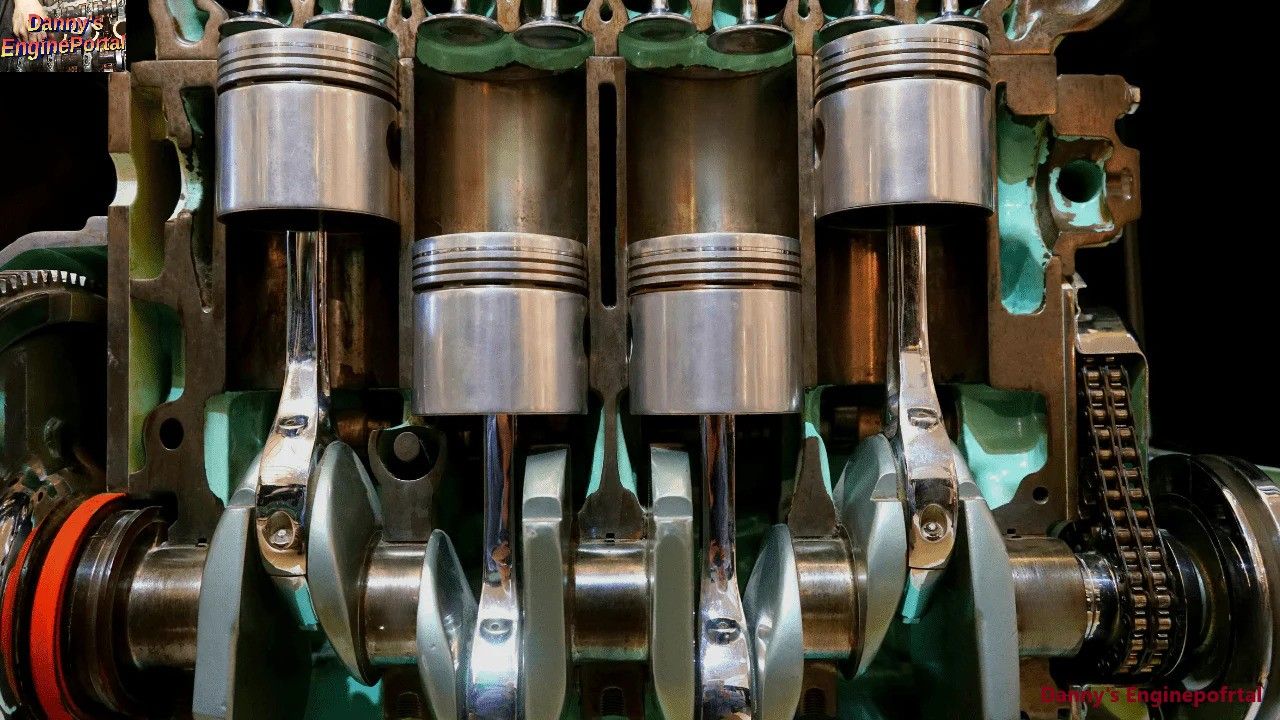
The engine consists of core components, including the engine block, pistons, crankshaft, camshaft, and valves, which turn fuel into mechanical power through combustion.
Three different subsystems make up the complete engine system. Engine Top End, Engine Bottom End and Engine Front End.
These parts are supported by essential subsystems like, lubrication, cooling, fuel, and ignition. They ensure smooth operation, optimal temperatures, and precise combustion timing.
The engine bottom end is the workhorse where the power comes together.
Engine Bottom End
Cylinder Block Deck. Above all the cylinder block deck is the critical, machined flat surface at the top of an engine block where the cylinder head and head gasket are mounted. It contains the cylinder bores, bolt holes, and fluid passages (oil and coolant), requiring a perfectly smooth finish to ensure a leak free seal.
Cylinders (cylinder walls). So in a combustion engine, cylinder walls are the internal surfaces of the cylinder block where pistons travel. They guide the piston, withstand immense combustion pressure, and transfer engine heat to the cooling system. Proper wall surface and lubrication are critical to prevent friction, overheating, and loss of compression.
Cylinder Block Sleeves (liners). Are a separate part pressed into the block. So, there are two basic types of cylinder sleeves: dry sleeves and wet sleeves.
Cylinder Bores. A cylinder bore is the diameter of the cylindrical space within an engine block where a piston moves. It is a crucial measurement in determining an engine’s displacement, performance capabilities, and the specific size of the pistons and rings required.
Main Caps.
Consequently they are bolted to the bottom of the cylinder block and form “one half” of the main bore. Large main cap bolts screw into holes in the block to secure the caps to the block
Main Bearings. Main bearings are the critical engine components that support the crank and allow it to rotate smoothly within the engine block. Sitting between the block and the crank, they minimize friction, maintain precise clearance, and absorb the massive forces generated during combustion.
Crankshaft. A crank is a vital mechanical component in internal combustion engines. Its primary function is to convert the “up and down” (linear) motion of the engine’s pistons into rotational (circular) motion.
Crank Main Journals. A crank main journal is the “precision ground”, cylindrical section of the crank that rotates within the engine blocks main bearings. It serves as the primary rotational axis for the crank, taking the brunt of combustion forces while riding on a pressurized film of oil to prevent “metal to metal” contact.
Crank Rod Journals. A crank rod journal (also known as a crankpin) is the offset cylindrical surface on a crank that connects the engine’s con rods to the crank. It converts the linear “up and down” motion of the pistons into the rotational force that drives the vehicle.
Flywheel. A flywheel is a heavy, rotating mechanical device used to store rotational kinetic energy. Because it resists changes in its rotational speed, it acts as an energy buffer—smoothing out power fluctuations and delivering continuous energy in systems where the power source is intermittent or uneven.
Connecting Rod.
A con rod (or con rod) is the critical engine component that links the piston to the crank. It converts the linear, “up and down” motion of the piston into the circular rotational motion of the crank.
Connecting Rod Bearings. A con rod bearing is a crucial, “high stress” engine component. It is the smooth, semicircular shell that sits between the con rod and the crank, acting as a wear surface that allows the parts to spin freely while preventing “metal to metal” contact.
Piston Pin. It allows the piston to swing on the con rod. The pin fits through the hole in the piston and the con rod small end.
Pistons. They transfers the pressure from the combustion to the con rod and crank. It must hold the piston rings and piston pin while operating in the cylinder.
Piston Rings. Automotive pistons normally use three rings, two compression rings and one oil ring.
Balancer Shafts. They are used in some engines to reduce vibration. These counterweighted shafts are generally on the left and right side of the engine block. Usually a belt or chain drives them.
Related Posts
File Fit Piston Rings: The Ultimate Sealing Method