ENGINE SYSTEMS
A cars engine systems is an internal combustion engine that converts fuel and air into mechanical energy to drive the vehicle. Most standard passenger cars use a four-stroke Otto cycle (intake, compression, combustion, and exhaust).
Engine Bottom End – The engine bottom end consists of everything located below the head gasket, primarily housing the main structural block and the rotating assembly that converts combustion force into rotational power.
Balance Shafts – They are used in some engines to reduce vibration. These counterweighted shafts are generally on the left and right side of the engine block. Usually a belt or chain drives them.
Connecting Rods – The central rotating shaft that converts the linear (up-and-down) motion of the pistons into rotational motion to drive the transmission.
Crankshaft – The central rotating shaft that converts the linear (up-and-down) motion of the pistons into rotational motion to drive the transmission.
Cylinder Sleeve – An engine cylinder sleeve (or cylinder liner) is a replaceable cylindrical wall inserted into an engine block to form the combustion chamber bore. It provides a wear-resistant surface for piston rings, repairs scored or cracked bores, and allows engine blocks to use lighter or more easily cast metals.
Engine Block (Cylinder Block) – The heavy metal foundation (iron or aluminum) that houses the cylinders, coolant passages, and the crankcase.
Flywheel (or Flexplate) – A heavy wheel bolted to the rear of the crankshaft that stores rotational energy, smooths out power strokes, and engages the starter motor.
Main Bearings & Rod Bearings – Precision shell inserts that sit between the moving metal surfaces (crankshaft-to-block and rod-to-journal), riding on a pressurized film of oil to eliminate metal-on-metal friction.
Pistons & Piston Rings – Cylindrical metal components that move up and down inside the cylinders during combustion; equipped with compression rings (to seal gas) and an oil control ring.
Rear Main Seal – A specialized seal around the back of the crankshaft preventing engine oil from leaking out where the transmission attaches.
Rod Caps & Main Caps – Bolted metal caps that secure the connecting rods and crankshaft into their respective journals inside the block.
Wrist Pins (Gudgeon Pins) – Steel pins that pivotally connect the small end of the connecting rod to the piston.
RELATED POSTS
Automotive Engine Failure: Warning Signs And Major Causes
Crankshaft Damage: Causes and Prevention in Diesel Engines
Crankshaft Thrust Bearing Failure – Causes And Remedies
Cylinder Sleeve – How To Install A Cylinder Sleeve To Save A Block
Engine Bearing Clearance: Why It Matters and How to Measure It
Engine Bearing Replacement: Understanding the Basics
Engine Bearing: How They Actually Work: Failure Warning Signs
Engine Bottom End Parts: Know The Parts Inside Your Engine
Engine Damage – Look for Deterioration, Before It’s Too Late
Engine Issues – Early Warning Signs – Major Causes Explained
Engine Piston Rings – How Do They Work – How Can They Fail
File Fit Piston Rings: The Ultimate Sealing Method
Flexplate – What Does It Do ? – What Can Happen If It Fails ?
Rear Main Rope Seal Installation Tips and Tricks
Repeat Engine Failures From Not Diagnosing The Original Problem
Worn Piston Rings: A Guide to Blow-by and Installation
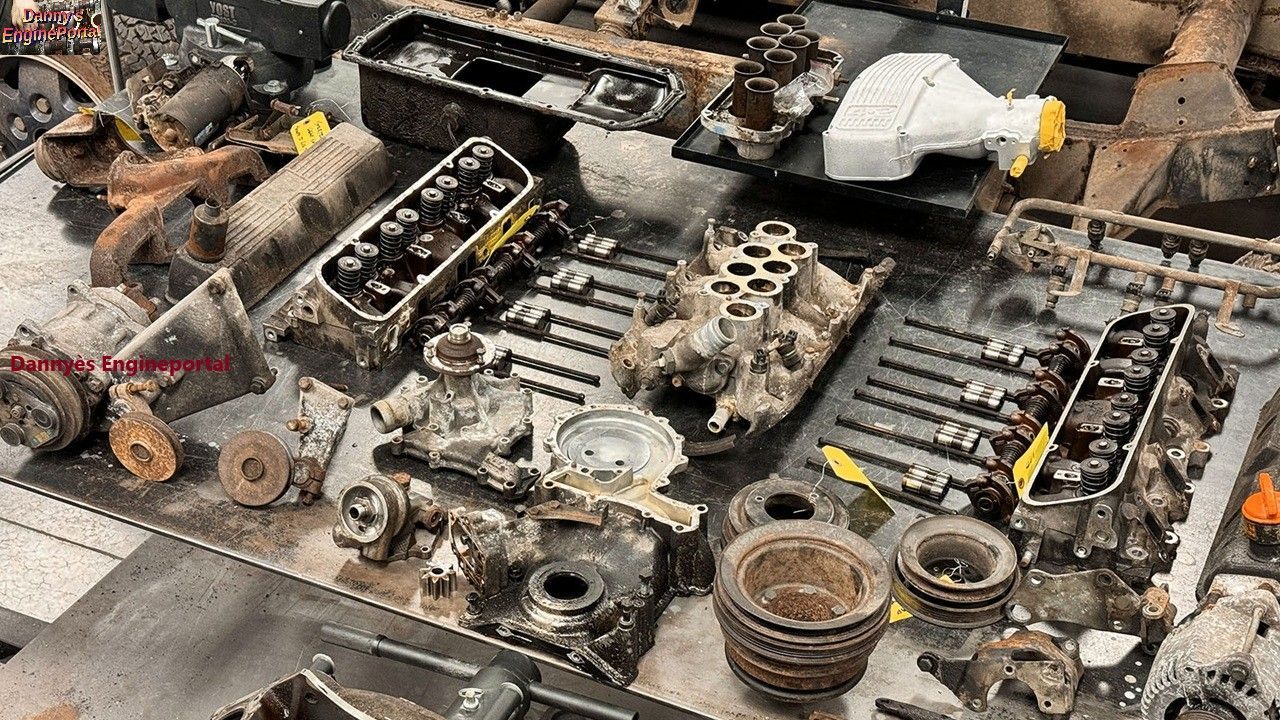
Engine Top End – The top end of an internal combustion engine refers to all the components situated above the head gasket. It is primarily responsible for sealing the combustion chamber, managing air and fuel delivery, and controlling valve timing.
Camshaft(s) (OHC) – The shaft with offset lobes that spins to push open the intake and exhaust valves at the precise time.
Cylinder Head – The main metal casting that sits on top of the engine block, forming the top of the combustion chambers and housing the ports, spark plugs, and valvetrain.
Head Bolts – High-tension fasteners that clamp the cylinder head down against the block.
Head Gasket – A high-pressure seal sandwiched between the cylinder block and the cylinder head to contain combustion gases, coolant, and oil.
Pushrods & Lifters – (In pushrod/OHV engines) Ride on the camshaft in the block and push up on the rocker arms.
Rocker Arms & Shafts – Pivot to transfer the motion from the camshaft lobes down to the valve stems (in overhead-valve or rocker setups).
Valve Cover (Rocker Cover) – The top metal or plastic cap that seals the top of the cylinder head to keep oil in and dirt out.
Valve Guides & Seats – Provide smooth alignment for the valve stems and a tight seal when the valves close.
Valve Springs & Retainers – Keep the valves closed and snap them back shut after the camshaft lobe passes.
Valve Stem Seals – Prevent engine oil from leaking down the valve guides into the combustion chamber.
Valves (Intake & Exhaust) – Metal poppet valves that open to let fresh air/fuel in and exhaust gases out, held shut by heavy springs.
RELATED POSTS
Automotive Engine Valves: Function, Failure, and Testing
Cylinder Head Cracking – Overheating Is The Most Common Cause
GM 3100 – 3400 Engine Issues: Heads, Manifolds and Rocker Bolts
Pushrods On G.M. 3.1-3.4 Engines – This Is Where Length Matters
Rocker Arms Dislodging: Along With Valve Seats Falling Out
Sticking Valves Because Of Carbon Deposits And Rich Fuel Mixture
Valve Guide Wear – How to Identify and Reduce Oil Consumption
Valve Job: Why Would You Need One – Causes – What To Expect
Valve Lash Setting For Quiet Engine Performance
Valve Lash: Getting All The Facts For Setting And Adjustment
Valve Lifters: Hydraulic vs. Mechanical (Solid), Learn the Difference
Valve Seats: Learn How To Install And Grind Valve Seats
Valve Springs Can Cause, Floating Valves and Pumped Up Lifters
Valve Stem Seal Failure: Follow The Symptoms and Conditions
Valve Stem Seals: Basic Function, Seal Types, Failure Symptoms
Engine Front End – The front end of an engine (often called the front timing and accessory drive area) contains the components that synchronize internal movement and power external engine accessories.
(VVT) Variable Valve Timing – Variable valve timing (VVT) is an engine technology that alters when the intake and exhaust valves open and close relative to the piston’s position. This process improves horsepower, fuel economy, and tailpipe emissions across different engine speeds and loads.
Accessory Drive Belt (Serpentine Belt) – A continuous belt driven by the crankshaft pulley that powers auxiliary components like the alternator, power steering pump, and A/C compressor.
Camless Engines – An emerging/advanced design that ditches traditional camshafts and timing belts/chains entirely. Instead, it uses electromagnetic, hydraulic, or pneumatic actuators to independently and electronically control every single valve with microsecond precision.
Camshaft Pulley / Sprocket – The gear attached to the end of the camshaft driven by the timing belt or chain.
Crankshaft Pulley (Harmonic Balancer) – Attaches to the nose of the crankshaft, dampens engine vibrations, and drives external accessories.
Front Main Seal – A rubber or silicone seal located around the crankshaft nose (often inside the oil pump housing) that keeps engine oil from leaking out the front.
Idler and Tensioner Pulleys – Bearings and spring-loaded wheels that maintain proper tension and guide the timing or accessory drive belts.
Oil Pump – Frequently mounted on the front of the engine block or integrated around the crankshaft nose to pressurize and circulate engine oil.
Serpentine Belt – A serpentine belt is a single, continuous multi-ribbed rubber belt that transfers power from the engine’s crankshaft to accessories like the alternator, power steering pump, water pump, and air conditioning compressor.
Timing Belt – A toothed, reinforced rubber belt that runs dry under a plastic or composite front cover; typically needs periodic replacement (e.g., every 60,000 to 100,000 miles).
Timing Belt/Chain Cover – A protective plastic or metal housing that shields the timing components from dirt, debris, and oil.
Timing Chain – A heavy-duty metal roller chain enclosed inside a sealed metal cover lubricated by engine oil; designed to last the life of the engine unless tensioners or guides wear out.
Timing Gears (GEAR TO GEAR) – A direct set of metal gears used in some overhead-valve or heavy-duty engines where the camshaft sits close to the crankshaft.
Water Pump – Usually located on the front of the engine block and often driven directly by the timing belt or serpentine/accessory belt to circulate coolant through the engine.
RELATED POSTS
(VVT) Variable Valve Timing: Enhancing Engine Performance
Automatic Belt Tensioner – Function – Failure Symptoms – Testing
Engine Timing Belt – Sets The Mechanical Heartbeat Of The Engine
Harmonic Balancer: Function: Common Failure Warning Signs
Interference vs. Non-Interference Engines: What You Need to Know
Serpentine Belt: Function – Failure Signs – Easy Replacement
Timing Belt Basics – Avoid the Unexpected Cost of Engine Damage
Timing Belt Failure: Causes, Symptoms, and Solutions
Timing Belts – Chains Or Gears, All Do The Same Thing, Differently
Timing Belts: Connect Parts Together, To Operate In Sequence
Top Dead Center – Is When the Piston Is at the Top of Its Stroke
Variable Valve Timing (VVT) – Benefits & Advantages Explained
Variable Valve Timing (VVT) – Function And Its Advantages
Engine Damage & Problems – Automotive engine damage happens when excessive heat, friction, or mechanical failure harms internal components like pistons, bearings, valves, or the cylinder head.
RELATED POSTS
Automotive Engine Failure: Warning Signs And Major Causes
Burning Oil: Blue Smoke Is Coming Out Of My Exhaust Pipe
Carbon Deposits in Engines: Causes, Effects, and Prevention
Common Engine Problems – Noises, Leaks, Overheating, And Fuel
Crankshaft Damage: Causes and Prevention in Diesel Engines
Crankshaft Thrust Bearing Failure – Causes And Remedies
Cylinder Head Cracking – Overheating Is The Most Common Cause
Engine Compression – What Can Cause, Low Or No Compression
Engine Damage – Look for Deterioration, Before It’s Too Late
Engine Knocking – Pinging – Rattling Noise – Most Common Causes
Engine Knocking Ticking Noise – Is This The End Of Your Engine
Engine Lubrication Problems – Lack Of Oil, Causing Engine Wear
Engine Oil Consumption Is On The Rise: Where It Goes, And Why
Engine Oil Pressure Low – Common Causes And Ways To Fix It
Engine Problems Can Be Scary – Learn About The Common Ones
Engine Rattling Noise – Reasons You May Have Them – Solutions
Engine Rebuild Reasons – Low Compression And Oil Consumption
Flexplate – What Does It Do ? – What Can Happen If It Fails ?
Fuel Wash: What is it – Check If You Have It – Common Causes
GM 3100 – 3400 Engine Issues: Heads, Manifolds and Rocker Bolts
Hydrolocked Engine: What Does It Mean – Possible Damage
Low Oil Pressure: Troubleshooting, Actually Starts At The Dipstick
Oil Consumption Has Many Causes, But, Worn Bearings Add To It
Repeat Engine Failures From Not Diagnosing The Original Problem
Rocker Arms Dislodging: Along With Valve Seats Falling Out
Valve Guide Wear – How to Identify and Reduce Oil Consumption
Valve Stem Seal Failure: Follow The Symptoms and Conditions
Valves and Piston Rings: Problems, Causes and Solutions
Engine Machining – Engine machining is the precision process of cutting, grinding, boring, or resurfacing internal combustion engine components to restore worn parts, correct warping, or modify dimensions for higher performance.
RELATED POSTS
Ball Hone – How To Get The Perfect Finish, For Piston Ring Sealing
Broken Bolt : Stud Removing : Can Be A Frustrating Waste Of Time
Cylinder Bore Deglazing – Purpose – Proper Crosshatch And Angle
Cylinder Head Resurfacing – Getting The Correct Surface Finish
Cylinder Sleeve – How To Install A Cylinder Sleeve To Save A Block
Valve Job: Why Would You Need One – Causes – What To Expect
Valve Seats: Learn How To Install And Grind Valve Seats
Engine Rebuilding – An engine rebuild is the process of taking an engine apart, cleaning and inspecting its components, machining or replacing worn or damaged parts, and reassembling it to restore function and reliability.
RELATED POSTS
Engine Rebuild Reasons – Low Compression And Oil Consumption
Engine Rebuilding And Remanufacturing: What Is The Difference
Engine Replacement : A Comprehensive Guide, For Every Vehicle
Torque Specification – Torque To Yield – Torque, Plus Angle
Torque To Yield Bolts (TTY): What Exactly Are They
Engine Repair – Engine repair is the process of diagnosing, fixing, or replacing faulty or worn-out components so an engine runs safely and efficiently. It typically targets specific problems without completely overhauling or replacing the entire engine.
RELATED POSTS
4 Liter Jeep Engine Was Famous: But, Was Not Without Its Faults
ATV Tech Tips: if an ATV Repair Seems Overwhelming, it Probably is
Auto Repair Basics: If You Drive, You Should Learn Basic Repairs
Automotive Mechanic – Challenged Every Day, With New Problems
Broken Bolt : Stud Removing : Can Be A Frustrating Waste Of Time
Torque Specification – Torque To Yield – Torque, Plus Angle
Torque To Yield Bolts (TTY): What Exactly Are They
Lubrication & Supporting Hardware – An automotive engine lubrication system reduces friction, removes heat, cleans internal contaminants, and seals clearances between moving parts using pressurized oil.
Oil Pan (Sump) – The metal or aluminum reservoir bolted to the very bottom of the crankcase that holds engine oil.
Oil Pump & Pickup Tube – The pump (often driven by the crankshaft or timing chain) that draws oil from the pan via a screened pickup tube and pressurizes it through the engine.
Windage Tray – A baffle plate located just above the oil pan that prevents the crankshaft from whipping up pooled oil into foam.
RELATED POSTS
Engine Lubrication Problems – Lack Of Oil, Causing Engine Wear
Engine Oil Pressure Low – Common Causes And Ways To Fix It
Engine Oil Pressure Warning – Possible Causes And Testing
Engine Oil Sludge: Is Caused By Your Engine Oil Breaking Down
Engine Sludge – Causes and Prevention Tips
Low Oil Pressure: Troubleshooting, Actually Starts At The Dipstick
Low Or High Oil Pressure: Is One Actually Better Than The Other
Low Zinc Engine Oil Guide: How to Protect Flat Tappet Cams
Oil and Lubrication System: Keeps Your Engine Moving
Oil Pan Gasket Leak – How to Diagnose and Confirm the Leak
White Stuff Under My Oil Filler Cap – What Is It ? Is It Bad ?
Engine Exhaust Smoke – The color of your engine exhaust smoke points to what your engine is burning—most commonly coolant, oil, or excess fuel.
White Smoke – Thin, wispy vapor at startup is usually harmless condensation that clears quickly. Thick, persistent white smoke (often sweet-smelling) indicates burning coolant from a blown head gasket, cracked cylinder head, or cracked engine block.
Blue or Blue-Gray Smoke – Signals burning engine oil inside the combustion chamber. Common culprits include worn piston rings, leaking valve stem seals, a faulty PCV valve, or worn turbocharger seals.
Black Smoke – Means the engine is burning too much fuel relative to air (a rich mixture). Typical causes include a clogged air filter, faulty fuel injectors, bad sensors, or intake/emissions restrictions.
Gray Smoke – Can point to burning oil, a faulty PCV valve or turbocharger, or—in some cases—burning transmission or brake fluid.
RELATED POSTS
Burning Oil: Blue Smoke Is Coming Out Of My Exhaust Pipe
Diesel Engine Issues: The Answers May Be In The Exhaust Smoke
Excessive Exhaust Smoke – A Sign Your Engine Needs Attention
Tailpipe Smoke: What Does The Color Of The Tailpipe Smoke Mean
Valve Guide Wear – How to Identify and Reduce Oil Consumption