The engine lubrication system comprises several critical components that work together. They circulate oil, reduce friction, clean internal parts, and manage heat.
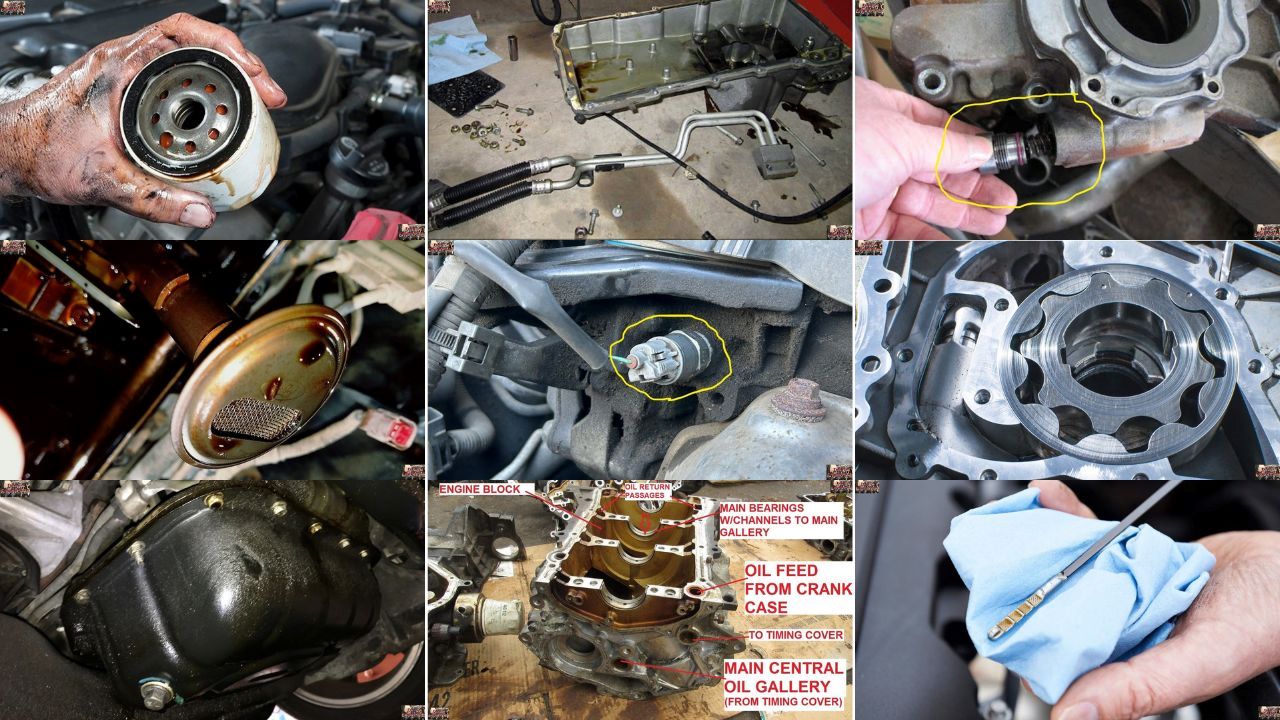
Key parts include the oil pan (reservoir), oil pump (pressurization), oil filter (contaminant removal), pickup tube/screen, and oil galleries (passageways).
An engine’s oil and lubrication system acts as its lifeblood, providing essential cooling, cleaning, and friction reduction by circulating oil to moving parts.
The oil and lubrication system reduces friction by forming a protective film between surfaces. Preventing premature wear, sealing cylinders, and resisting corrosion for optimal engine performance.
Key Components of the Lubrication System:
- Oil Pan (Sump). Located at the bottom of the engine, this pan serves as the reservoir for engine oil when the engine is not running.
- Pickup Tube and Strainer. A “straw” submerged in the oil pan that draws oil in; the screen (strainer) filters out large debris before it enters the pump.
- Oil Pump. The “heart” of the system, this pump (gear or rotary type) draws oil from the pan and creates the pressure needed to send it to the engine’s moving parts.
- Pressure Relief Valve. Regulates the system’s pressure to prevent over-pressurization, allowing excess oil to return to the pan.
- Oil Filter. Removes contaminants, soot, and microscopic metal particles from the oil to prevent wear, with a relief valve that allows oil to bypass it if it becomes clogged.
- Oil Galleries (Galleries/Passageways). Passageways machined into the engine block and components (like the crankshaft) that deliver oil to bearings, pistons, and the valvetrain.
- Oil Cooler: Helps maintain optimal oil viscosity by cooling it down, preventing overheating in high-performance or heavy-duty engines.
- Oil Pressure Sensor/Gauge: Monitors the pressure within the system and triggers a warning light (oil pressure light) if it drops too low.
- Dipstick (Oil Level Indicator): Allows for manual checking of the oil level within the pan.
Primary Functionality
- Reduce Friction: Lubricates moving parts like pistons, camshafts, and bearings.
- Cooling: Dissipates heat from engine parts.
- Cleaning: Carries dirt and metal filings to the filter.
- Sealing: Enhances the sealing of piston rings.
Related Posts
- Antifreeze In Oil: Means Your Engine Is Leaking Internally
- Burning Oil: Blue Smoke Is Coming Out Of My Exhaust Pipe
- Coolant Mixed With Oil: Causes and Solutions
- Engine Lubrication Problems – Lack Of Oil, Causing Engine Wear
- Engine Oil Consumption Is On The Rise: Where It Goes, And Why
- Engine Oil Sludge: Is Caused By Your Engine Oil Breaking Down
- Fuel Getting Into Engine Oil: Learn The Cause, Effect And The Fix
- Low Zinc Engine Oil Guide: How to Protect Flat Tappet Cams
- Oil and Lubrication System: Keeps Your Engine Moving
- Oil Consumption Has Many Causes, But, Worn Bearings Add To It
- Oil Mixed With Coolant: Causes and Effects
- White Stuff Under My Oil Filler Cap – What Is It ? Is It Bad ?