
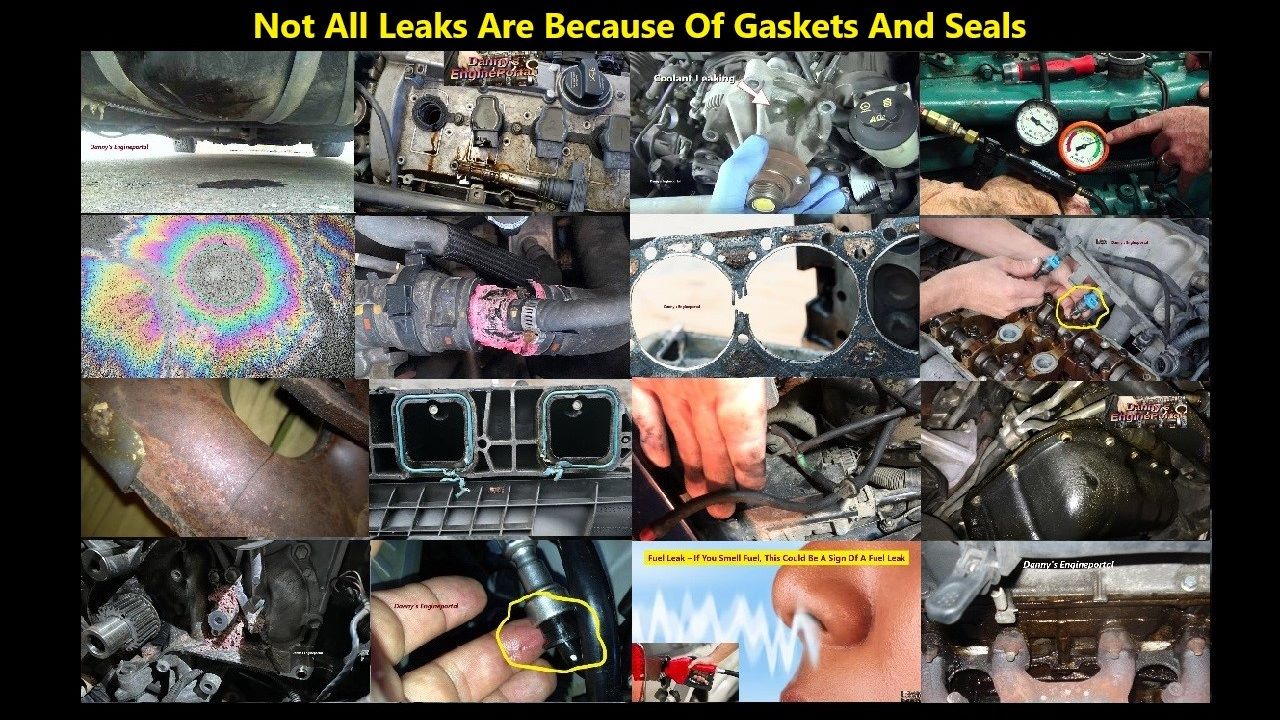
The Leaks, Gaskets, and Sealing system constitutes a critical set of components designed to prevent the escape of fluids (oil, coolant) or gases (exhaust).
Effective leak prevention and sealing require matching the right material to the application, whether using preformed gaskets for stationary joints or liquid sealants for, gaps, threads, and dynamic sealing.
These systems,, often termed static or dynamic seals, work under high compression, temperatures, and pressures to maintain operational integrity.
Learn more about leaks, gaskets and sealing to keep your engine safe and healthy.
Primary Engine Gaskets And Leaks
- Head Gasket: Located between the engine block and cylinder head, it seals combustion chambers, coolant channels, and oil passages.
- Valve Cover Gasket: Seals the top of the cylinder head, preventing oil from leaking out of the valve cover.
- Intake Manifold Gasket: Seals the intake manifold to the cylinder head, preventing air/vacuum leaks or coolant leaks.
- Exhaust Manifold Gasket: Seals the exhaust manifold to the cylinder head, preventing dangerous exhaust gas leaks.
- Oil Pan Gasket: Ensures a tight seal between the oil pan and the bottom of the engine block.
- Timing Cover Gasket: Seals the front of the engine, protecting the timing chain/belt.
Specialized Seals
- Crankshaft Seals (Front & Rear): Prevent oil from leaking out at the front and back of the crankshaft, crucial due to the rotational movement.
- Camshaft Seals: Used in overhead cam engines to prevent oil leaks near the camshafts.
- O-Rings: Small rubber or elastomer rings used in both static and dynamic applications to provide a tight seal, often for fluid ports.
- Lip Seals/Oil Seals: Used to prevent the leakage of lubricants in engines and pumps.
Additional Sealing Components
- Oil Drain Plug Seal/Washer: A small washer on the oil pan plug, preventing leaks at the drain point.
- Oil Filter Adapter Gasket: Seals the adapter connecting the oil filter to the engine.
- Gasket Sealers/RTV Silicone: Room Temperature Vulcanizing (RTV) silicone or anaerobic sealers applied to enhance sealing on surfaces, particularly in high-vibration areas.
Gasket Materials
- Gaskets are chosen based on the heat and pressure of the application:
- Rubber/Elastomers (Neoprene, Silicone): Flexible, good for oil pan or valve covers.
- Metal (Steel, Copper): Used in high-pressure/heat scenarios, such as Multi-Layer Steel (MLS) head gaskets.
- Composite/Graphite: Used to withstand high heat while providing better sealing conformity.
- Paper/Cork: Used in low-pressure applications.
Related Posts
- Antifreeze In Oil: Means Your Engine Is Leaking Internally
- Bubble Test – Used In Conjunction, With A Cylinder Leak Down Test
- Coolant Mixed With Oil: Causes and Solutions
- Compression Leak Between Cylinders: Without Any Coolant or Oil Leaks
- Cylinder Head Gasket Leaks: Symptoms and Expensive Repairs
- Cylinder Leak Down Test – What Are The Results Telling You
- Engine Coolant Leaks: How To Find Them – External And Internal
- Engine Oil Leaks – How To Find Them – Repair Recommendations
- Exhaust Manifold Leaks: Causes, Failure Signs, Potential Damage
- Fluid Leak Under Your Car: Here’s How To Identify What It Is
- Fuel Leak: If You Smell Fuel This Could Be a Sign of a Fuel Leak
- Head Gasket Leak: External vs. Internal Leaks
- How To Do A Cylinder Leak Down Test – With Or Without A Tester
- Intake Manifold Leaks – Causes, Symptoms, Testing and Prevention
- Leaking Head Gasket: Causes and Symptoms Explained
- Oil Leak In Spark Plug Well – Know The Signs – What Can Happen
- Oil Mixed With Coolant: Causes and Effects
- Oil Pan Gasket Leak – How to Diagnose and Confirm the Leak
- Rear Engine Oil Leaks: Finding The Real Location Of The Leak
- Vacuum Leak Detection: How to Find & Fix Vacuum Leaks Safely
- Vacuum Leak Repair: Locations, Common Causes, Common Repairs
- Vacuum Leaks – How To Quickly Find Them In 5 Easy Steps
- Valve Cover Gasket Leaks: There Are Common Warning Signs