A fuel pressure regulator is an integral part of a vehicle’s fuel system.
Now most engines use a fuel pressure regulator. However, there are things that can go wrong with them.
Your fuel pressure regulator is designed to keep fuel within a specific range of pressure.
If the fuel pressure regulator is keeping it out of this range. Then the vehicle will not run or will run inefficiently. So testing the fuel pressure regulator is a simple task. It only requires some minor equipment and a short amount of time.
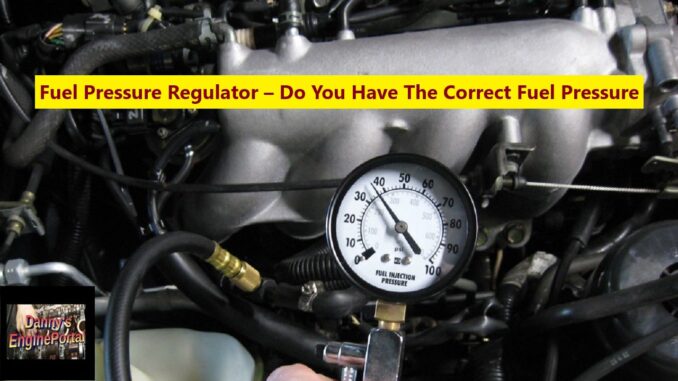
First spend the money and get a good fuel pressure testing gauge. I have heard of people using a Tire Gauge, BUT Don’t, it will not handle the high pressure. Because, the average fuel pressure can be anywhere from 45 psi to 55 psi. To be sure, consult with your vehicle owner’s manual for the proper fuel pressure range before performing this test.
There Are Two Different Problems That A Bad Regulator Can Cause
1. Low Fuel Pressure
Most problems with fuel pressure are due to the pressure being too low. The inability of the fuel pump to increase the fuel pressure up to the vehicle’s specs, may have several causes.
Some of these causes may include:
- If the pressure is too low, there may not be enough fuel reaching the engine for it to start. Or, if it does start, it may not run efficiently.
- A fuel leak is a cause of low fuel pressure. Although this problem can often be identified without the need for installing a fuel pressure gauge.
- Other problems that can cause low fuel pressure. There may be a kinked fuel inlet line or a clogged fuel filter or strainer.
- A bad fuel pump in the fuel tank, can also prevent the fuel pressure from reaching the required level.
2. High Fuel Pressure
Fuel pressure that is too high, can cause the engine to run too rich. Common causes of high fuel pressure include; a bad fuel pressure regulator or a clogged return line.
You will need to perform two different tests to identify the reason for high fuel pressure:
- The first test requires you to relieve the system fuel pressure. Then connect a relief hose to the fuel return line. Place the free end of the hose in a container, and activate the fuel pump. The fuel return line is blocked if the fuel pressure now meets specs. Otherwise, the regulator may be faulty.
- The second test requires you to allow the engine to idle. Then remove the vacuum hose on the fuel pressure regulator, for vehicles that are so equipped. The regulator may be faulty if the fuel pressure does not increase by about 5-10 psi.
Too high of pressure may result in over fueling of the engine. Consequently, this can lead to a rough running engine, poor fuel mileage, and black smoke coming from the exhaust. If your regulator is going bad, your engine could display several different symptoms.
Check Your Regulator If You Notice Any Of The Following
Spark Plugs Are Black
Remove a spark plug and examine the end of it. If it is sooty, it could be a sign of a bad fuel pressure regulator. If you find a plug in this condition, check the rest of them. A sooty spark plug could just mean the engine is burning oil in that cylinder.
If you end up replacing your fuel pressure regulator, you might also want to replace your plugs. You can try simply cleaning them and putting them back. But, if your engine still runs poorly get new ones.
Engine Runs Rough
If you are idling the engine and it is not running smoothly. Then change your oil filter and check your pressure regulator.
Another sign that your engine is suffering from a bad regulator is you have trouble starting the engine. It will turn over a few times before it actually starts.
The Exhaust Pipe Emits Black Smoke
Having black smoke coming out of your exhaust pipe can be a sure sign there is something wrong. It could be your fuel pressure regulator. Replace it.
The normal color of any smoke coming out of the exhaust should be white or gray, not black. If you see the latter, there is definitely something wrong.
The Dipstick Smells of Gasoline
Check the oil dipstick and see if you smell fuel on it. If you do, it could be a symptom of a bad fuel pressure regulator. It has allowed fuel to leak into the oil system.
If not repaired quickly it will cause the oil to lose its lubricating properties. As a result, damaging engine bearings.
Gasoline Drips Out of the Exhaust Pipe
Fuel dripping out of your exhaust pipe is either the result of you overfilling your tank. Or a bad fuel pressure regulator.
Most likely, the gas is leaking into the exhaust system. Because the regulator is letting it pass into the lines. As a result, causing major damage to the catalytic converter.
Engine Stalls
If the engine stalls when you press down on the gas pedal, check the fuel pressure regulator. There shouldn’t be any hesitation when you press on the gas.
Even if you only notice a little hesitation, get your pressure regulator checked out. It may just be starting to go bad.
Gasoline Is in the Vacuum Hose
If you are noticing any of the signs above and are not convinced of the cause. Then it could mean a bad fuel pressure regulator. You can do the following to check the cause one way or the other.
- Remove the vacuum hose that attaches to the fuel pressure regulator, making sure the engine isn’t running. If gas is in the line, your fuel pressure regulator is bad. Also, if there is none in the line, but when you turn it on. Fuel drips out of the hose, it is bad.
In Summary: Fuel Pressure Regulator
Finally, we hope that this information we just provided, helps you understand how fuel pressure regulators work and fail.
Thank You!