Leaks
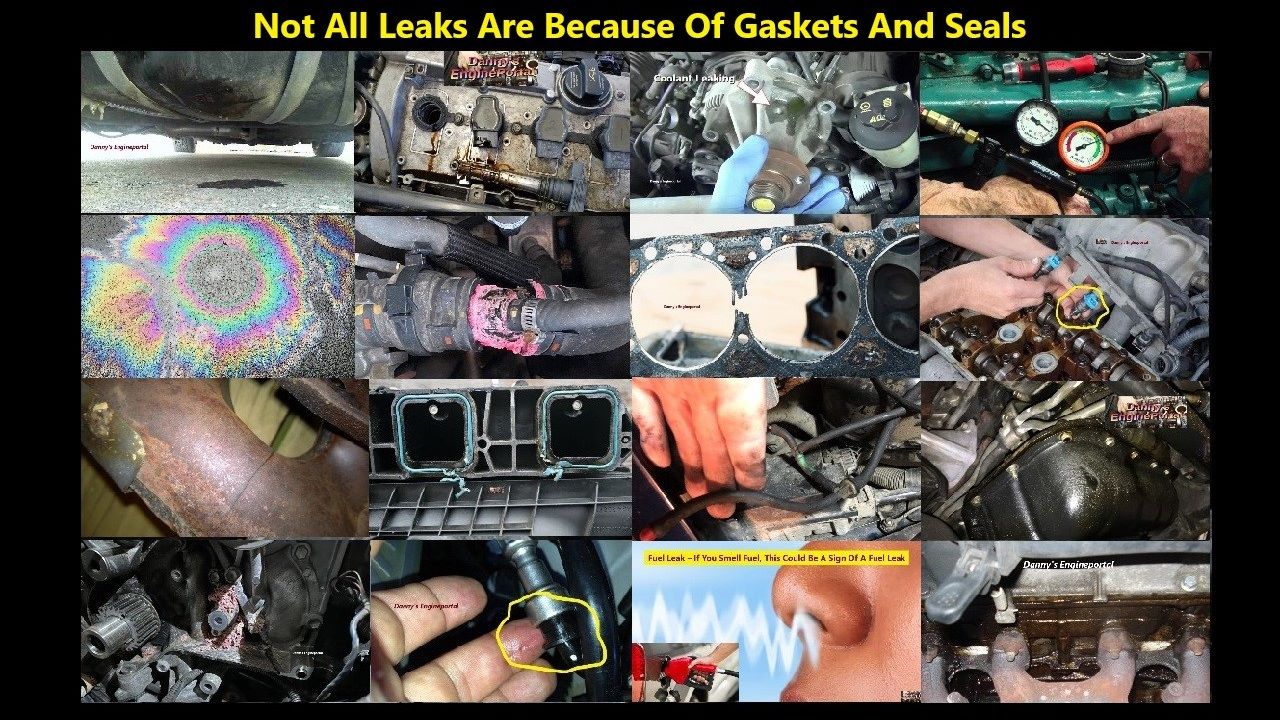
Car engine leaks can come from various fluids, and you can identify them by checking the fluid’s color, smell, consistency, and location.
An engine vacuum leak happens when unmeasured air enters the intake system past the airflow sensor, creating a lean air-fuel mixture that throws off engine performance.
The most common engine compression leaks are caused by worn piston rings, leaking or burnt valves, and a blown head gasket.
Less frequent, but more severe causes include: cracked or warped cylinder heads, damaged pistons, or timing issues that keep valves from sealing on time.
Compression Leaks – The most common engine compression leaks are caused by worn piston rings, leaking or burnt valves, and a blown head gasket. Less frequent—but more severe—causes include cracked or warped cylinder heads, damaged pistons, or timing issues that keep valves from sealing on time.
Blown Head Gasket – A failed gasket between the engine block and cylinder head lets compression escape between adjacent cylinders or into the cooling system, which can cause coolant bubbling or overheating.
Cracked Cylinder Head, Block, or Damaged Pistons – Severe overheating or mechanical stress can crack castings or warp/damage pistons, causing persistent compression loss.
Leaking, Burnt, or Bent Valves – Intake or exhaust valves that do not seat tightly let pressure escape into the intake manifold or out the exhaust pipe. Overheating, wear, or carbon buildup can prevent a clean seal.
Valve Timing Issues – A worn or slipped timing belt/chain or worn camshaft lobes can throw off valve opening and closing, dropping compression across cylinders even if the rings and valves themselves are intact.
Worn Piston Rings or Cylinder Walls – Air leaks past the piston into the crankcase (blow-by), often heard at the oil filler cap or dipstick tube and linked to oil burning or blue smoke. Most users on Danny’s Engineportal agree that worn piston rings and scored or damaged cylinder surfaces are primary culprits behind compression loss.
RELATED POSTS
Compression Leak Between Cylinders: Without Any Coolant or Oil Leaks
Engine Compression – What Can Cause, Low Or No Compression
Engine Rebuild Reasons – Low Compression And Oil Consumption
White Stuff Under My Oil Filler Cap – What Is It ? Is It Bad ?
Fluid Leaks – Engine fluid leaks are commonly caused by worn gaskets, degraded seals, loose fittings, or damaged components, and they require prompt identification based on fluid color, location, and smell.
Brake Fluid – Transparent Yellow or Brown: Brake fluid (slippery texture, near the wheels or master cylinder).
Clear Water – Normal air conditioning condensation (harmless).
Coolant / Antifreeze – Green, Yellow, Pink, or Orange: Coolant / antifreeze (slimy, sweet smell, found near the radiator or front of the engine).
Engine Oil – Brown or Black: Engine oil (thick syrup consistency, petroleum smell).
Fuel Leaking – Strong gasoline odor: Smelling raw fuel inside or outside the cabin.
Transmission Fluid – Red or Brown-Red: Transmission fluid (middle or back of the car, smooth feel, sweet or burnt smell) or power steering fluid (front, near the steering components).
RELATED POSTS
Antifreeze In Oil: Means Your Engine Is Leaking Internally
Coolant Mixed With Oil: Causes and Solutions
Engine Coolant Leaks: How To Find Them – External And Internal
Engine Oil Leaks – How To Find Them – Repair Recommendations
Fluid Leak Under Your Car: Here’s How To Identify What It Is
Fuel Leak: If You Smell Fuel This Could Be a Sign of a Fuel Leak
Gas Getting Into Oil – What Can Cause This To Happen, And Why
Oil Leak In Spark Plug Well – Know The Signs – What Can Happen
Oil Mixed With Coolant: Causes and Effects
Rear Engine Oil Leaks: Finding The Real Location Of The Leak
White Stuff Under My Oil Filler Cap – What Is It ? Is It Bad ?
Gasket & Seal Leaks – Engine gasket leaks happen when a seal between engine parts wears out, warps, or fails under heat and pressure, allowing oil, coolant, or combustion gases to escape or mix.
Head Gasket – Seals the cylinder head to the engine block to hold combustion pressure and separate oil and coolant. Leaks are less frequent than valve cover or pan leaks but more serious, potentially causing overheating, white exhaust smoke, rough idling, or milky oil.
Intake Manifold Gasket – Seals the intake manifold to the cylinder head, preventing coolant, oil, or air/vacuum leaks that can cause rough running, misfires, or coolant loss.
Oil Pan Gasket – Seals the bottom of the engine where oil collects. Heat cycling, age, or road debris/corrosion near the pan can cause seepage or puddles under the vehicle.
Timing Cover Gasket – Seals the front timing assembly and can leak engine oil or coolant depending on engine design. Replacement usually requires removing front engine components and accessories.
Valve Cover Gasket – Seals the top of the cylinder head. Rubber or cork dries out and cracks over time, often causing oil drips onto hot exhaust parts, burning oil smells, or oil in spark plug wells.
RELATED POSTS
Blown Head Gasket: The Symptoms, Can Be Quite Misleading
Cylinder Head Gasket Leaks: Symptoms and Expensive Repairs
GM 6.6L Duramax Diesel: Choosing The Correct Head Gasket
Head Gasket Leak: External vs. Internal Leaks
Intake Manifold Leaks – Causes, Symptoms, Testing and Prevention
Leaking Head Gasket: Causes and Symptoms Explained
Valve Cover Gasket Leaks: There Are Common Warning Signs
White Stuff Under My Oil Filler Cap – What Is It ? Is It Bad ?
Vacuum Leaks – An engine vacuum leak happens when unmeasured air enters the intake system past the airflow sensor, creating a lean air-fuel mixture that throws off engine performance.
RELATED POSTS
Engine Vacuum Gauge Test: A Simple Guide
Vacuum Leak Detection: How to Find & Fix Vacuum Leaks Safely
Vacuum Leak Repair: Locations, Common Causes, Common Repairs
Vacuum Leaks – How To Quickly Find Them In 5 Easy Steps
Vacuum Test Basics – What To Check And How To Do It