ENGINE CODES & LIGHTS (OBD) System
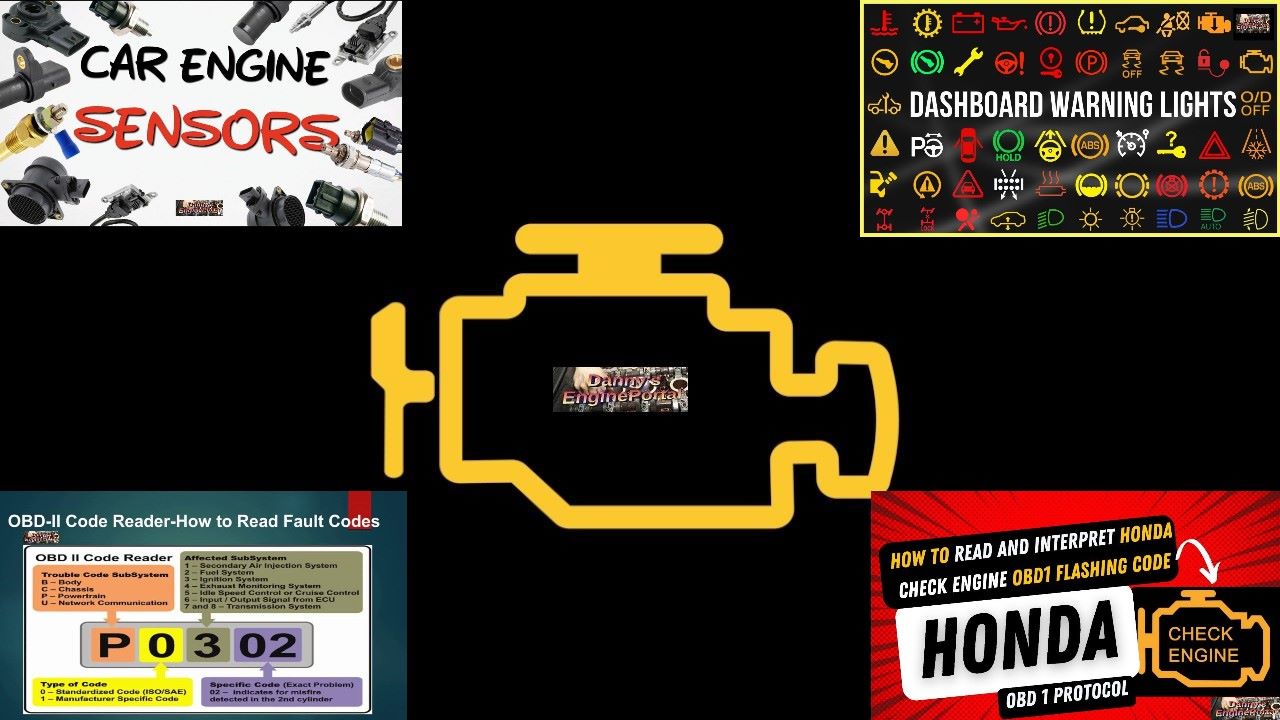
OBD-II codes are part of the self-diagnostic system that all cars come with. The OBD system uses Diagnostic Trouble Codes (DTC) to tell you which specific component has an issue. They’re five-digit codes and are made up of four different subsets of codes that indicate where in the vehicle the malfunction lies (for example, P1234).
NOTE – The first number in the (DTC) tells you if the code is specific to the vehicle manufacturer or a generic code that applies to all OBD-II systems. The last three numbers tell you specific information on the vehicle system or circuit that is running into trouble. The first of these subsets is the powertrain, or P codes, and is the largest of the four categories. This is followed by network and integration (U), body (B), and chassis (C) codes.
NOTE – The P codes deal with the powertrain system of the vehicle, which includes the engine, transmission, and any associated drivetrain accessories. P codes can be further broken down by where the numeric total after the P lies in the OBD-II code list:
P0100-P0199 – Deal with fuel and air metering and monitor the vehicle’s fuel mileage and emissions systems. Parts like the oxygen sensor lie within this subset of P codes as well as parts controlling air-to-fuel ratios in the vehicle.
P0200-P0299 – Associated with the fuel injector circuit and will only include parts like the fuel injectors.
P0300-P0399 – Indicate issues with engine misfiring so they typically include parts like spark plugs or ignition parts.
P0400-P0499 – Deal with auxiliary emissions controls like the Evaporative Emission Control (EVAP) system. The (EVAP) functions by preventing gas fumes from reaching the outside atmosphere and keeping air pollution to a minimum.
NOTE – The next couple of P code subsets have to deal with a vehicle’s computer systems:
P0500-P0599 – Deal with the vehicle speed controls and idle control systems. Typically, issues with the vehicle speed sensor (VSS) will trigger these codes on the vehicle.
P0600-P0699 – Computer output circuit problems and any issues stemming from a faulty computer system will trigger these codes.
P0700-P0899 – Specifically indicate problems with the transmission system and any related components. Since these codes monitor the functioning of the transmission, their appearance typically relates to faults in the computer that control how the transmission operates.
RELATED POSTS
Engine Troubleshooting – Common Problems With Solutions
Honda OBD1 Codes: How to Read Check Engine Light Without a Scanner
Lights – Car dashboard lights use a color-coded system to signal the status of your vehicle’s systems, ranging from safe informational notices to critical mechanical failures.
Battery Light – The battery warning is easy to decipher because it looks exactly like the thing that needs attention.
Flashing / Blinking Check Engine Light (CEL) – A severe engine misfire is happening, which can melt or damage your catalytic converter. Pull over safely and turn off the engine or call a tow truck immediately.
Noid Light – Tests For An Electrical Signal, At The Fuel Injector
Red Brake System Light – Parking brake is engaged or brake fluid is low.
Red Engine Temperature / Thermometer Light – The engine is overheating. Pull over and shut off the car right away.
Red Oil Pressure Light – Low oil pressure or low oil level. Stop the car immediately to avoid catastrophic engine seizure.
Reduced Engine Power Light – A Reduced Engine Power warning light means your vehicle’s computer has triggered a “limp mode” to protect the engine from serious damage.
Steady Yellow Check Engine Light (CEL) – An emissions, ignition, or fuel system issue has been detected. It is safe to drive short distances for service soon, though ignoring it hurts fuel economy. Check if your gas cap is loose first.
Yellow Tire Pressure Light (TPMS) – One or more tires are underinflated.
RELATED POSTS
Alternator or Battery Failure: How to Diagnose and Save Money
Car Battery – Know What Can Go Wrong, Before You Disconnect It
Check Engine Light (CEL) – What Can Cause It To Come On
Dash Warning Lights – Only Provide A Warning Something Is Wrong
Engine Oil Pressure Low – Common Causes And Ways To Fix It
Engine Oil Pressure Warning – Possible Causes And Testing
Engine Overheating: Causes, Symptoms, Diagnosis & Fixes
Intermittent Temperature Related Engine Problems, Where To Start
Low Oil Pressure: Troubleshooting, Actually Starts At The Dipstick
Low Or High Oil Pressure: Is One Actually Better Than The Other
Noid Light: Tests For An Electrical Signal, At The Fuel Injector
Reduced Engine Power Warning Light – What To Do And Why?