
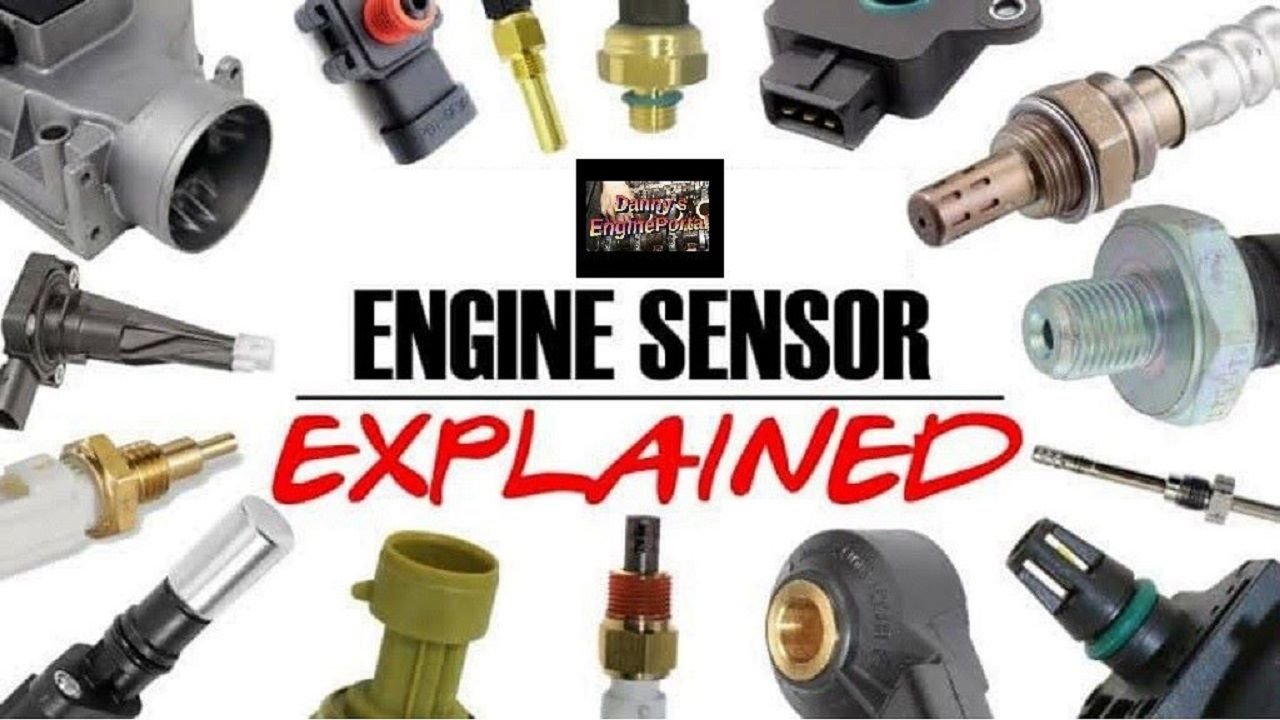
Sensors & Solenoids
Car engine sensors monitor various physical conditions and send data to the Electronic Control Unit (ECU) or Engine Control Module (ECM) to optimize performance, fuel economy, and emissions.
Position Sensors – Car position sensors track the exact location or movement of mechanical parts and send electrical signals to the vehicle’s Electronic Control Unit (ECU) or body control modules. They control critical functions like ignition timing, fuel injection, gear shifting, steering, and safety features.
Crankshaft Position (CKP) Sensor – Tracks the rotation speed and exact position of the crankshaft to time fuel injection and spark ignition. Essential for starting the engine.
Camshaft Position (CMP) Sensor – Identifies camshaft position and valve timing to synchronize sequential fuel injection.
Throttle Position Sensor (TPS) – Monitors the throttle valve angle or accelerator pedal position to adjust fuel supply and ignition timing.
Airflow & Pressure Sensors – Car air flow and pressure sensors help the engine control unit (ECU) calculate how much fuel to inject for proper combustion, fuel economy, and low emissions. The two primary intake sensors are the Mass Air Flow (MAF) sensor and the Manifold Absolute Pressure (MAP) sensor.
Mass Air Flow (MAF) Sensor – Measures the volume and mass of air entering the intake system.
Manifold Absolute Pressure (MAP) Sensor – Measures pressure inside the intake manifold to calculate engine load and air density.
Temperature Sensors – Car temperature sensors use thermistors (usually Negative Temperature Coefficient, where resistance drops as temperature rises) to measure heat and send signals to the vehicle’s computer (ECU/PCM) to control fuel mixture, ignition timing, cooling fans, and warning gauges.
Coolant Temperature Sensor (CTS) – Monitors engine warmth to govern cold-start fuel delivery and cooling fan activation.
Intake Air Temperature (IAT) Sensor – Measures incoming air temperature to help the (ECU) compute air density.
Air-Fuel Ratio & Emissions Sensors – Oxygen (O₂) sensors measure exhaust oxygen levels to adjust the air-fuel ratio, while knock sensors detect abnormal engine vibrations from pre-ignition or detonation to protect the engine.
Oxygen (O2) Sensor – Measures unburnt oxygen in the exhaust gases to regulate the air-fuel mixture.
Knock Sensor (KS) – Detects engine vibrations or premature detonation (pinging) so the (ECU) can retard ignition timing.
RELATED POSTS
(ECT) Engine Coolant Temperature Sensor – What Can Go Wrong
Automotive Sensors: Monitoring Your Vehicle’s Vital Signs
Camshaft Position Sensor Symptoms, Testing & Replacement (CMP Guide)
Crankshaft Position Sensor Symptoms, Testing & Replacement (CKP Guide)
Engine Coolant Temperature (ECT) Sensor: Failure Signs: Testing
Engine Coolant Temperature Sensor: Step By Step Replacement
Loose Gas Cap: Most Common Cause For A Check Engine Light
Mass Air Flow Sensor (MAF): Measuring Volume, Density, Temperature
O2 Oxygen Sensor Symptoms (Causes, Testing & Replacement Guide)
Oxygen Sensor (O2) Diagnostic Testing Guide: By Walker
Throttle Position Sensor (TPS) – Function – Failure – Testing