A engines air intake and exhaust system is critical for engine performance, efficiency, and emissions.
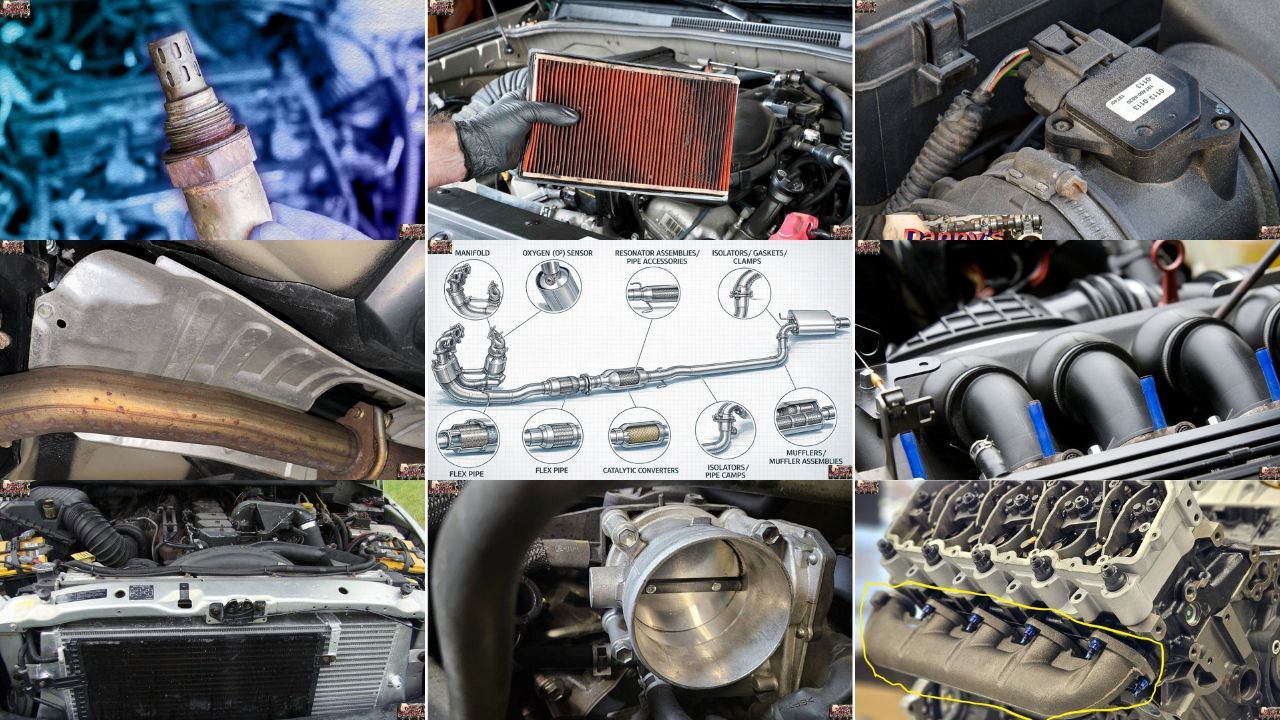
The intake system pulls in and cleans air, consisting of an air filter, air duct, throttle body, and intake manifold.
The exhaust system removes combustion gases, featuring the exhaust manifold, catalytic converter, muffler, and tailpipe.
The air intake and exhaust system is critical for engine performance, acting as the engine’s lungs and breath by managing air intake and combustion byproduct outflow.
Air Intake System Components
These parts work together to supply clean air to the combustion chamber:
- Air Filter/Cleaner: Removes dirt and contaminants from the air before it enters the engine.
- Air Duct/Inlet: Pipes that draw in cold, fresh air from outside the engine bay.
- Mass Air Flow (MAF) Sensor: Measures the amount of air entering the engine, allowing the engine control unit (ECU) to calculate the required fuel.
- Throttle Body: Controls the volume of air flowing into the engine based on the driver’s throttle position.
- Intake Manifold/Plenum: Distributes the intake air evenly to each cylinder.
- Intercooler (Turbocharged engines only): Cools the compressed air from the turbocharger to increase density and power.
Related Posts
- GM 3100 – 3400 Engine Issues: Heads, Manifolds and Rocker Bolts
- Rough Engine Idle and Misfires When Cold: GM V8 Engines
- Turbocharger: How it Works and Why it’s Essential
Exhaust System Components
These components collect, treat, and release exhaust gases safely:
- Exhaust Manifold/Headers: Collects hot exhaust gases from the cylinder head outlets and directs them into the exhaust pipe.
- Oxygen Sensors (O2 Sensors): Monitor the oxygen levels in the exhaust to optimize the fuel-air mixture.
- Catalytic Converter: Reduces harmful pollutants in the exhaust gases through chemical reactions.
- Turbocharger (Hot Side): Uses exhaust gas pressure to spin a turbine, driving the air intake compressor.
- Muffler/Silencer: Reduces noise produced by the exhaust gases leaving the engine.
- Resonator: Acts as a second muffler to cancel specific sound frequencies for quieter operation.
- Exhaust Pipes (Downpipe/Tailpipe): The connecting pipes that route the gas under the vehicle, finishing at the tailpipe.
- Heat Shields and Hangers: Protect surrounding components from high temperatures and secure the exhaust system to the vehicle frame.
Related Posts
- Abnormal Exhaust Noise, Common On 02-05 Ford 6.0L Diesels
- Air Injection System (AIS) – Air Pump – Function, Types, Failure
- Burning Oil: Blue Smoke Is Coming Out Of My Exhaust Pipe
- Catalytic Converter – Failure Signs And Testing – Learn The Basics
- Diesel Engine Issues – The Answers May Be In The Exhaust Smoke
- Emission Thermactor Plugs – For Small Block Ford Cylinder Heads
- Excessive Exhaust Smoke – A Sign Your Engine Needs Attention
- Exhaust Manifold Leaks: Causes, Failure Signs, Potential Damage
- Tailpipe Smoke: What Does The Color Of The Tailpipe Smoke Mean