• Bluesky
  • Facebook
  • Instagram
  • Linkedin
  • Pinterest
  • Reddit
  • Threads
  • X
Danny's Engineportal Site Logo 300x100
  • Home
  • Blog
  • About
HomeHow Car Engines Work

How Car Engines Work

Understanding how car engines work is essential for diagnosing problems and performing accurate repairs. The internal combustion engine converts fuel into mechanical power using a combination of precisely timed components.

This category explains engine components and systems in detail, including pistons, crankshafts, camshafts, and timing mechanisms. It’s designed as a foundation for both beginners and experienced DIY mechanics.

What you’ll learn:

  • How engine components work together
  • Basic engine operation and combustion cycles
  • Common internal engine failures

If you want to understand engines before diving into repairs, this is your starting point.

👉 For diagnostics and repairs, see: Engine Maintenance & Troubleshooting
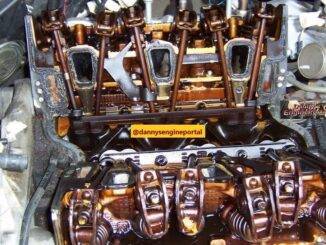
GM 3100 - 3400 Engine Issues
How Car Engines Work

GM 3100 – 3400 Engine Issues: Heads, Manifolds and Rocker Bolts

01/07/2025
GM 3100 – 3400 engine issues, are still happening and are being repeated. We still have leaks, installation problems, as well as cylinder head and rocker bolt issues. That’s because, most people are still confused, —READ-MORE
Types Of Valve Lifters
How Car Engines Work

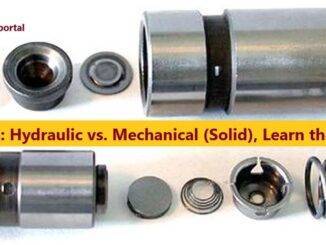
Valve Lifters: Hydraulic vs. Mechanical (Solid), Learn the Difference

01/04/2025
So, valve lifters, come in either hydraulic or mechanical (solid). But, what is the real difference, between them. Both, hydraulic and mechanical (solid) valve lifters, have the same job, but do it differently. They both —READ-MORE
Harmonic Balancer On Front Of Engine
Engine Troubleshooting and Diagnosis

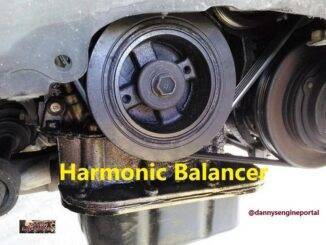
Harmonic Balancer: Function: Common Failure Warning Signs

01/02/2025
So, what is the main function of the harmonic balancer? Well, it is to absorb and reduce, harmonic and torsional vibrations from the engine. Consequently, your harmonic balancer is mounted, on the front of your —READ-MORE
Engine Bearing Location
How Car Engines Work

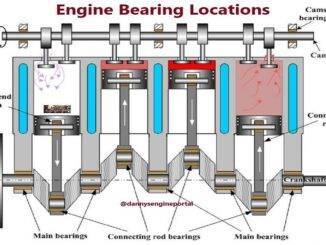
Engine Bearing: How They Actually Work: Failure Warning Signs

12/08/2024
An engine bearing is a small and relatively inexpensive component, of an internal combustion engine. However, failure of an engine bearing most often leads to, serious reconditioning work of the engine. Most often, including its —READ-MORE
Machining Cylinder Head To Accept Valve Seats
How Car Engines Work

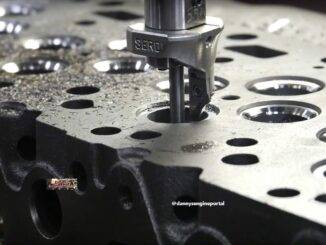
Valve Seats: Learn How To Install And Grind Valve Seats

11/30/2024
Learning how to machine, install and grind valve seats, can help solve many, valve leakage and valve burning issues. First, the growth of the valve seat market, can be traced back to the early 1970s. —READ-MORE
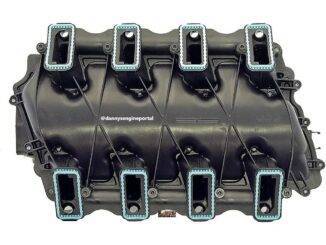
GM 4.8 5.3 6.0 Intake Manifold
Engine Troubleshooting and Diagnosis

Rough Engine Idle and Misfires When Cold: GM V8 Engines

11/21/2024
Rough Engine Idle and Misfires When Cold on GM 4.8L, 5.3L, 6.0L engines is common, and getting harder to diagnose. As, GM V8 engines are prone to a rough idle, and engine misfire when cold. —READ-MORE
Valves And Piston Rings Seal Compression
How Car Engines Work

Valves and Piston Rings: Problems, Causes and Solutions

11/15/2024
Valves and piston rings, are crucial for your engine to function properly. Aside from your head gasket, these are the parts that are responsible for, sealing the combustion chamber. Most of the time, valves and —READ-MORE
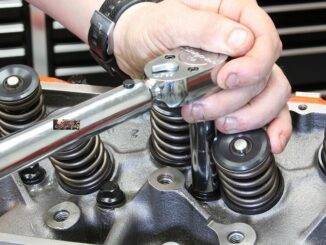
Using Torque Wrench to Tighten Torque To Yield Bolts
How Car Engines Work

Torque To Yield Bolts (TTY): What Exactly Are They

11/12/2024
Torque to yield bolts, are exactly what they sound like. So, when tightened, they stretch to the point of yield. Many vehicle manufacturers use torque to yield bolts. Especially, on engines with aluminum heads, and —READ-MORE
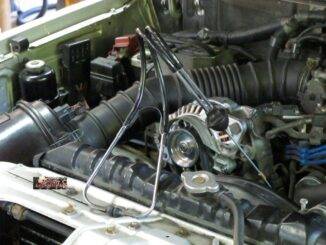
Using Stethoscope to Find Engine Noise
Engine Troubleshooting and Diagnosis

Engine Noise: Common Causes and Solutions

11/09/2024
Many drivers just ignore engine noise, and hope that it’ll just go away on its own. Chances are it won’t, and that engine noise will only get worse, leaving you with an even bigger problem. —READ-MORE
Diagnose Engine Problems - With Nothing More Than Your Senses
Engine Troubleshooting and Diagnosis

Diagnose Engine Problems: With Your Sight, Hearing, Touch and Smell

11/01/2024
By paying attention to your car, you can diagnose engine problems, with your sight, hearing, touch and smell. Most of the time the driver, will be the first to notice, when something is starting to —READ-MORE

Posts pagination

« 1 … 6 7 8 … 11 »

Search by recent posts

  • Bubble Test: Used in Conjunction, With a Cylinder Leak Down Test
  • Fuel Pump Related No Start Problems: What Should You Check
  • Emission Thermactor Plugs: For Small Block Ford Cylinder Heads
  • File Fit Piston Rings: The Ultimate Sealing Method
  • Abnormal Exhaust Noise: Common On 6.0L Diesels
  • Valve Lash: Getting All The Facts For Setting And Adjustment
  • Oil Mixed With Coolant: Causes and Effects
  • Rocker Arms Dislodging: Along With Valve Seats Falling Out
  • Automatic Shutdown (ASD) Relay: Function – Failure – Testing
  • Thermostat Problems: Will Affect Your Engine’s Performance

Search by category

  • Car Cooling and Heating System Problems
  • Engine Gasket and Seal Problems
  • Engine Oil System and Lubrication Problems
  • Engine Sensors and Diagnostic Systems
  • Exhaust and Emissions System Problems
  • Fuel System Problems and Diagnosis
  • How Car Engines Work
    • Engine Troubleshooting and Diagnosis
  • Ignition and Electrical System Problems

Search by tag

air fuel mixture imbalance battery camshaft carbon buildup check engine light coolant coolant leak crank no start crankshaft cylinder head engine bearings engine damage engine hesitation engine knocking engine misfire engine noise engine oil engine overheating fuel delivery problem fuel injector fuel pump head gasket ignition coil ignition failure loss of power low compression mass airflow sensor no crank no start condition OBD2 codes oil consumption oil leak oil pressure sensor piston rings poor fuel economy radiator rough idle spark plugs thermostat ticking noise timing belt trouble codes vacuum leak valves visual inspection
stay connected
  • Bluesky
  • Facebook
  • Instagram
  • Linkedin
  • Pinterest
  • Reddit
  • Threads
  • X
  • Privacy Policy Copyright

COPYRIGHT © 2026 Danny's Engineportal by Danny Bender

We use cookies on our website to give you the most relevant experience by remembering your preferences and repeat visits. By clicking “Accept”, you consent to the use of ALL the cookies.
Do not sell my personal information.
Cookie settingsACCEPT
Privacy & Cookies Policy

Privacy Overview

This website uses cookies to improve your experience while you navigate through the website. Out of these cookies, the cookies that are categorized as necessary are stored on your browser as they are essential for the working of basic functionalities of the website. We also use third-party cookies that help us analyze and understand how you use this website. These cookies will be stored in your browser only with your consent. You also have the option to opt-out of these cookies. But opting out of some of these cookies may have an effect on your browsing experience.
Necessary
Always Enabled
Necessary cookies are absolutely essential for the website to function properly. This category only includes cookies that ensures basic functionalities and security features of the website. These cookies do not store any personal information.
Non-necessary
Any cookies that may not be particularly necessary for the website to function and is used specifically to collect user personal data via analytics, ads, other embedded contents are termed as non-necessary cookies. It is mandatory to procure user consent prior to running these cookies on your website.
SAVE & ACCEPT